 Chat with AGB Board Bot
Opinions expressed in AGB podcasts are those of the speakers and not necessarily those of the organizations that employ them or of AGB.
What do higher education boards need to know about free speech today? In this episode, AGB’s Jackie Gardina talks with Jonathan Friedman of PEN America to explore what every governing board should understand about free speech, academic freedom, and institutional autonomy. Together, they explore the First Amendment’s role in public vs private institutions, the misconceptions around hate speech, and how governing boards can uphold both inclusion and open inquiry in an increasingly polarized environment.
Aired: December 12, 2025
Podcast Transcript
Introduction:
Welcome to the Trusteeship Podcast from AGB, the Association of Governing Boards of Universities and Colleges. Today, we’re talking about what higher education boards need to know about free speech. AGB’s Jackie Gardina talks with Jonathan Friedman of PEN America to explore what every governing board should understand about free speech, academic freedom, and institutional autonomy. Together, they explore the First Amendment’s role in public versus private institutions, the misconceptions around hate speech, and how governing boards can uphold both inclusion and open inquiry in an increasingly polarized environment. Let’s get started. Jackie?
Jackie Gardina:
Jonathan, we ask a lot of boards of trustees in terms of understanding and regulating speech and a learning environment on institutional campuses, but the constitutional right to free speech is complex, and it’s often misunderstood. In a higher education context, I think it gets even more complicated. Let’s just start with a basic definition of free speech and maybe a couple of examples of when it’s implicated and when it isn’t implicated.
Jonathan Friedman:
Well, you’re right. Freedom of expression, free speech on campus, is a broad concept. I think the most important thing for us to remember is that when we’re talking about the First Amendment, we’re talking about a restriction on how the government acts with regard to the regulation of speech. And that means that we are concerned, when we think about the First Amendment in the United States, with how public institutions act, not necessarily private ones.
But what’s interesting about free speech is that, here, many private higher education institutions are interested in upholding something like the First Amendment or the notion of free speech. The idea being that campuses and the academic enterprise is really about the search for knowledge, the unfettered exchange of ideas, the ability to have open inquiry and pursue knowledge wherever it takes us, and to exchange ideas. That’s what people think a lot about when they think about college campuses. Whether an institution is public or private isn’t always the best indicator of how in practice they’ve developed policies concerning free speech because there’s a distinction between what they’re legally obligated to do, where public and private are in different categories, and how they realize their mission, where actually many private institutions tend to cue pretty close to how the First Amendment is interpreted over time.
But I think what’s most important when we think about this is that in the US, we neither live in a society where there is total and absolute free speech nor total and absolute regulation of speech, meaning total government control of ideas. Most of the time, what we’re talking about when we talk about these issues is, how do we draw the line? How do we set a consistent policy or principle that can be implemented in a way that is fair and consistent and give different people who have different ideas, different views, different political vantage points, different topics that they want to talk about the same opportunities to do so? And that’s what’s so important on our college campuses.
Jackie Gardina:
You just talked about the idea that the First Amendment right to free speech is not an absolute, as no constitutional right is. What can a government entity do in terms of regulating speech on campus?
Jonathan Friedman:
What I think is most important to understand, first of all, is that the answer to this evolves. Because of the way that judiciary in the United States is involved in interpreting the First Amendment and reinterpreting it every generation, how we talk and think about what regulations are allowable is reflective of, well, the ways in which law has been subsequently interpreted, or the First Amendment has been interpreted, over time. Although the First Amendment says Congress shall make no law against freedom of speech, well, today that’s not really true. There are all kinds of laws that are allowable when it comes to free speech, but the key is that they are meant to be neutral to content and to viewpoint, meaning that there is a sort of evaluation of any policy that might regulate speech in terms of whether it leaves ample space and for communicating messages otherwise, whether it is narrowly tailored to achieve a compelling government interest, whether it is, in fact, as I said, content and viewpoint neutral toward speech based on its subject matter or ideology or perspective behind it.
That set of considerations is what is going to be at play if we are talking about interpreting whether a regulation that a university, and a public institution in particular, wants to put into place would pass, in a sense, constitutional muster. In general, these are called time, place, and manner restrictions when it comes to campuses and when we think about the quad or other spaces on campuses, meaning that they are allowable restrictions on where people can get together, what times they can do so, and the manner in which they do it. For example, if they can use sound amplification or bullhorn or something like that.
There are circumstances in which it has been determined that you can, as a public institution, have some rules about this, have some limitations. For example, let’s say in a residential quad where a whole lot of people are sleeping, it is reasonable that there might be rules against making a tremendous amount of noise with a large number of people in the middle of the night. But, if you create laws like that that are so clearly designed to censor a particular viewpoint or to say that one view can do that, but another viewpoint can’t, that’s where it gets to be unconstitutional.
And I think where we see some confusion sometimes is about these issues at private universities where there is actually greater leeway. A private institution doesn’t have to necessarily hue to those time, place, and manner restrictions. They can set different policies. However, in the traditions of the American college, it has been generally viewed that it’s better to be more open to speech than closed. And this is certainly something that we at PEN America advocate. We see a lot of private universities mimic the policies of public ones when it comes to these issues.
Jackie Gardina:
Well, let me ask a question about restrictions as it relates to something that we hear about a lot, this idea of hate speech. Can an institution regulate speech that’s deemed to be offensive or derogatory?
Jonathan Friedman:
I think the key here to think about when it comes to hate speech or hateful speech, however we might call it, is that there is no law in the United States that circumscribes a kind of speech as hateful, meaning that it could justify its censorship or regulation in unique ways. There are ways in which people speak to one another. There is conduct that surrounds speech before or after and certain categories that apply more to conduct and sometimes consider the content of speech. But on the whole, I think there is a sort of a hate speech myth that a lot of people have is that there’s a kind of sense that certain terms, certain words, certain ways in which they’re said or could be said between people ought to be illegal. And you see this on a lot of campuses where there were and have been and continue to be instances with hateful speech, and people want the university to crack down on it, to punish someone for it, to say that that is speech that’s out of line.
What is important for people to understand, though, is that if you were to empower someone to say this kind of speech, let’s say offensive speech or derogatory speech, counts as hateful speech, you can’t get around the fact that that’s still going to entail a degree of subjective judgment, meaning that whoever is in charge, whether that’s, let’s say, a university president, or it could be an elected official, they can choose to interpret that how they like. And they could say, “Well, what you are saying on this campus that is critical of our university president or of our president of our country,” or something, “is offensive or is derogatory, and therefore it’s hate speech, and therefore you must be punished.” And it’s what free speech advocates would call a slippery slope.
Over time, what has developed is a body of thought that says rather than try to regulate hateful speech whose definition can be so slippery, instead move toward thinking about other kinds of ways of responding to speech when it is other kinds of ways of responding to speech when it is hateful. And that means there’s an onus on university leadership to be kind of mindful about the student experience and the campus climate, but that’s different from saying that there’s going to be this kind of speech that crosses the line. Now, if you have something like graffiti on a building that’s a form of hateful, you know, it’s a hateful message, well, that might be against the rules, but it’s not actually because of the message. It’s because of the form, the graffiti that may not be allowed. And I think what’s important to remember is that again, there are going to be more restrictions on public institutions when it comes to setting these policies, but at private institutions, you’re going to face the same challenges. If you proceed with developing a set of policies where you suggest that a kind of speech is unallowable on campus among students or faculty or et cetera, you’re going to face the same challenge, which is, well, people will call on you as the authority on campus to punish other people for whatever they think crosses the line.
Jackie Gardina:
Let me ask this Jonathan, because I think this is a place where boards of trustees at higher education institutions are in a tough spot. They have an obligation to create a safe learning environment for their students. At the same time, especially in public institutions, it would be violating First Amendment rights to regulate the content of speech, what we might call a hate speech. So what are the steps or how do they balance their obligation to create that safe learning environment, with that constitutional obligation to protect free speech rights?
Jonathan Friedman:
It is certainly a balancing act and a challenge, and it’s been something that many campuses have struggled with. And many good, well-intentioned individuals and experts also struggle with this because it can be essentially dancing on an edge between these two principles, both of which are really important to uphold. So as you said, on the one hand, campuses have to be places that anyone could attend classes from any background and feel like they are able to succeed, that they are not being exposed to derogatory comments, that there is not what’s called a hostile environment for them based on their identity. And at the same time, the institution has an obligation to, well, defend people’s rights to say all those things if people want to. And the reality is that you can’t actually stop people from saying things. If you think about, I don’t know, any parent who’s ever had a kid and had a moment where they didn’t want them saying something in front of grandma, it’s very difficult to exercise that kind of control.
Now you can punish people afterward, you can take steps otherwise to explain to someone how something is offensive, to educate them, to encourage them not to, to ask them not to, to ask them to be respectful of other people. But at the end of the day, you can’t actually always stop people from saying something that they may say off the cuff. And I think too many campuses have sort of set up this idea that they can. And instead of attending to, well, how do we make a campus climate where there’s going to be a give and take where we understand that people might say things that other people find offensive, it makes for education that doesn’t actually talk about real issues or confront for example, just the horrors of history that we know are so important in a civic education and for future leaders, for future citizens to have an accurate knowledge of the past.
And so the key here is to have some way of assessing when there has been speech that someone finds offensive, you can ask yourself, “Well, was this intended to be offensive or was it not? Was this spoken in good faith and as part of a dialogue about an issue where people have differing views?” Even right now, we’re dealing with many people who have these anti-science views, they’re afraid of vaccines, et cetera. There are ways in which all of the things that we’re talking about with freedom of speech and regulating speech could be weaponized to say certain academic beliefs are offensive, are derogatory, et cetera, but you’re just going to shut down the opportunity to educate people. So I would say far better in these moments for campuses to think about what else can they do to demonstrate that they aren’t trying to be hostile to anyone’s identity? What else can they do to affirm that they have an inclusive approach to campus, that people from all backgrounds, political beliefs, et cetera, have a place there?
And sometimes that doesn’t mean directly addressing something that happens. Sometimes it means finding other ways to offer supports to students, to communicate publicly about something that crossed the line, to engage people. I think time and again, the thing that people overlook is just the importance of saying to someone, “I’m sorry you’re feeling that way,” or, “I understand, I empathize. I can imagine myself and how I would feel if I encountered that,” or just, “I hear you.” I think so much of the time leaders are afraid to do that. And I think what we should all try and do is spend a little more time listening and understanding a lot of university leaders truly are trying to balance, as you said, this challenging consideration of free speech even when it might offend, and supporting students without resorting to censorship.
It also just requires, frankly, work, it requires commitment, it requires investment, it requires resources to do it well. And it’s been a challenge for some universities because they may not have that easily at their disposal or they may have wishful thinking that it won’t require those steps. And I think in our experience, these are the kinds of things that campuses have been wary or slow to invest in, but it’s really what it will take to make that kind of inclusive campus where people might take offense at one another, but they understand free speech, they understand why it’s so important to protect it first.
Jackie Gardina:
We have seen in the past several years, specifically state legislatures, pass laws that restrict what can be taught or said in the classroom. Faculty have been required to change syllabi and course content, websites have been scrubbed, and people are avoiding certain topics in the classroom. So do these laws implicate the First Amendment in the higher education context?
Jonathan Friedman:
Well, I think they most certainly do. Now, whether the Supreme Court is going to agree with me and others who view it this way, I think we’re kind of waiting to see, but just at a fundamental level, if you have a situation where a state legislature is saying X, Y, and Z topics can’t be taught, but we also believe in the importance of free speech for faculty members who have expertise and have a, not just a right, but even a responsibility to transmit that expertise to the rising generation, well, clearly we have a free speech issue in the making. Now, what I think is most alarming right now is how hard it has been to keep up with documenting the kind of chilling ripple that has spread across the country.
A few years ago, it was only in some, let’s say, red states where some laws were being floated, and at this point, we’ve seen all kinds of laws, some of which directly prohibit topics and other laws that may not prohibit topics, but they kind of set up situations where faculty might be punished for what they do or do not teach. And I think that’s really made a lot of faculty very fearful. And that’s not going to help young people learn, it’s not going to create the kinds of campuses where we can have that free exchange of ideas, that open conversation. And I think that’s so important to protect. And so yes, these laws do directly impact the First Amendment, but at the same time, that determination takes time. So if a law gets passed tomorrow, if you’re working on a university campus and you have to uphold it, you’re in a really tight spot a lot of the time, because you might know that it’s not consistent with the First Amendment, but nonetheless as a university leader, you have to uphold it.
So what do you do? I think more often than not, the key is to understand that a lot of these laws are actually very vague. I often say to people, “Don’t go beyond the laws. If the law says you can’t teach these certain topics, well, unless they’re really being very clear and very explicit about what it is you can’t teach, and most of the time they’re not, then I think instead of interpreting them from the space of fear and anxiety, which is to say, ‘Well, how might this be interpreted,’ instead interpret them from a place of literal analysis that says, ‘Well, it says this, and what I teach…’ or whatever ‘… isn’t that.’
And a lot of the same laws also do have exceptions that have been written into them for academic freedom, for academic teaching, but nonetheless, we don’t really see a lot of people trying to lean on those and say, well, this explicitly does not apply to the classroom. Actually, a lot of the laws have said that they don’t, and so there’s no reason to overinterpret. And I think so much of the time what we’re seeing now from university leaders is that kind of anxiety. The law doesn’t say this, but I know it’s what the legislators intended, and so therefore I’m going to implement it as it was intended, and this is this slippery way in which you suddenly have campuses that are implementing laws, but that’s not what the law actually says. And instead, what I think we have to do is recognize that these laws are extremely dangerous, for the very same reasons that a regulation of hate speech or anything else can be so dangerous, because they can be used to silence all kinds of views.
And I think this is what is so important to be heard right now across the political spectrum is that the principle of free speech is actually the only thing that can get us out of some of these partisan back and forth, in the sense that it cannot be about who’s going to interpret or propose a law that’s going to silence the other one more. Instead, what we should be working on is how do we uphold everybody’s rights? And if a group of people, conservative, liberal, whatever, feel silenced, feel like they have been intimidated and they can’t share their research, or their thinking, or their opinions, well, that’s a problem no matter where it’s coming from.
And I think the political nature and the politicized nature of a lot of these debates hasn’t helped to advance them and find a new way forward, but hopefully at some point the bubble bursts and we are able to emerge with a new consensus about this and understand that these are a threat to not just faculty rights, but also to students, the right to learn, the right to receive information, which is also very much implicated to them.
Jackie Gardina:
Yeah. And I think that’s a really important thing, when you were talking about the classroom, we often focus almost exclusively on the teacher at the front of the classroom and what their rights might be. But you highlighted just now that implicated within that First Amendment framework is the listener’s right, or the student’s right in this case, to receive information. So, is that protected by the First Amendment as well?
Jonathan Friedman:
It is, yeah. And there’s a quote by Frederick Douglass who once pointed out that silencing people was a double wrong for both the speaker and the listener. There’s also a line of judicial decisions about First Amendment cases that do emphasize the right to receive information, including students’ right to learn about the world. I often think of it as a narrowing of educational horizons. Ironically, this is what many conservative thinkers were concerned about maybe two decades ago, the closing of the American mind. And actually, now, we’re seeing that, but we’re seeing it in a different way. And that’s not to say there hasn’t been challenges to freedom of speech on campuses from the left as well, there certainly have been. No one has an exclusive hold on challenges to free speech, in particular because our collective and shared appreciation for free speech has been so weak. And if anything, out of this moment, I hope we will be able to find our way towards that.
Jackie Gardina:
You mentioned in your last answer this concept of academic freedom, and I do want to just spend a moment on it because academic freedom is such an academic word, and it’s often not understood or perceived to be an intellectual’s right that doesn’t apply to everyone else. What is the importance of academic freedom? What is it, and why is it so important to higher education’s endeavor?
Jonathan Friedman:
So, when we think about academic freedom, there’s a few different schools of thought, and we can also, I think, start with an appreciation for the fact that there isn’t consensus about how broadly it ought to be drawn or what it ought to defend and not, and that’s actually a good thing, because consensus, though it’s important, can sometimes work at odds with the natural dynamism of the university. And so, it’s hard to summarize all the range of thoughts around how academic freedom ought to be upheld. And those aren’t only thoughts in the United States, they’re thinking about academic freedom in countries around the world or as a global human right as well. Here, you have a tradition in which academic freedom has been advanced as a norm, tradition, expectation of universities, largely driven by the AAUP and faculty, and at the same time, you have specific cases in which academic freedom has been recognized as a principal that is of special concern to the First Amendment and to constitutional legal interpretation.
And so, what exactly does all this mean? It doesn’t mean that all the debates around it are closed, it means that there are definitely some questions right now that are still open. But if you think about it, similar to free speech as a cardinal principle, we’re talking about the freedom, the rights, the protections that make it possible for academics to do their work. That actually, there is consensus around that. A faculty member ought to be able to pursue research where it leads them, ought to be able to teach courses that are reflective of their expertise, and core to academic freedom historically is also the protection for being able to criticize your own university leadership, and also to engage in what’s called extramural speech, speech that informs and engages the public.
Now, I think this is some of the most important speech that faculty be protected to do because if all you can do as a faculty member is publish in esoteric journals, or teach students who can afford your classes or whatever it is, well, then you are limiting the reach of your scholarly knowledge, which ought to inform government and public policy and public debate. And so, it is so important, I think, for how the frontiers of science and social science and really any field are pursued to have that protection for academics to be able to engage and speak publicly. This has led to a conundrum when it comes to social media and when it comes to speech that isn’t really about your expertise.
So, when we’re talking about an academic speech on topics that are related to their expertise and in spaces that are clearly academic expertise spaces, a college classroom, an academic conference, it’s very clear that that’s academic freedom. But as we move out of that, where exactly the line is becomes a bit blurry when we can imagine there are contexts in which you as a private citizen are speaking, and you’re not in an academic space, and you’re speaking about a topic that’s not reflective of your academic expertise. You’re just commenting on something in a movie that you like, maybe you’re writing an op-ed or something like that, and that’s not really academic freedom.
In that case, now we’re talking more about your free speech rights as a private citizen. The challenge is, does everything that you might say get covered by one sphere of protection or the other, or is there a speech that’s in between and it’s less clear? Social media in particular has challenged a lot of those conceptions because it is such a new medium and it moves across them very easily. So, I can be an academic who starts a Facebook page, and my former students connect with me through there and they’re not my students anymore, but I still publicize things there, am I talking as an academic or am I talking as a citizen? And I think a lot of the times I harken back to the COVID-19 pandemic, where many academics actually spent a lot of time trying to inform the public through social media.
And so, I really reject the notion that social media as a phenomenon should somehow be outside of academic freedom because that’s how I understood the course of the COVID-19, the virus. This was people trying to explain and inform others what they ought to know and understand about this. And so, the best thing that I think that universities can do is understand that there might still be some gray around this issue, but they are far better off where they are forced to siding with a more protective attitude towards expression. A more protective attitude towards the expression of their faculty, whether that’s through the lens of academic freedom or respectful of their freedom of speech as citizens, it doesn’t actually matter because ultimately we’re still talking about the principle of free expression.
And then also, it doesn’t really matter whether we’re talking about public or private as we’re talking about the principle, and that’s something that everyone can believe in, and so the spate of dismissals and punishments of faculty are very concerning to me because on so many cases on so many campuses, we have seen pretty drastic repercussions for faculty without respect to these free expression principles whatsoever.
Jackie Gardina:
We’re going to move slightly. We’ve talked about the students’ rights, we’ve talked about the faculty’s rights, but institutional speech, what the institution says, has been a big topic over the last two years, especially since the Israel-Hamas War, although it predates that if we go back to the 2020 statements after George Floyd’s murder. A lot of institutions were making statements, but now many schools have adopted policies of what they’re calling institutional neutrality. What should trustees be considering when thinking about institutional speech on their campus?
Jonathan Friedman:
I think the most important thing here is to have a considered deliberation around it among trustees and with university leaders and other campus members. I think it’s often the case in higher education as a sector that some new concept or new idea promises itself to be the silver bullet, and then it gets a lot of momentum behind it without people really thinking it through.
The Kalven Report, which is often credited with the original thinking around institutional neutrality, wasn’t really being put forth until we hit a war where universities were torn apart by differing beliefs about where the moral center on the issue was. With competing groups demanding that their university side a little bit more with them than with the other side … it doesn’t matter what side, you’re wrong … this put many university leaders in a bind, out of which, lo and behold, neutrality seemed like a good answer for the meantime.
In the long run, we are seeing now governments starting to mandate neutrality for institutions. Now, there’s some question about whether that is the right approach. I think where it’s mandated from governments, it’s actually concerning, because you essentially have the government telling people they can’t have views and they can’t speak them. Here now we’re getting into exactly what the First Amendment is meant to prevent.
Trustees at an institution, the key here is to really think it through. Because whether you’re going to land on neutrality or what some people have called institutional restraint or some other concept, the key is to be clear about what the policy is. What are you going to follow as a process as a university leader when you consider speaking about any political contemporary issue? Do you have the freedom to say what you think? Do you not? Who should be consulted? Who should not? I tend to be someone who believes that we should always have more speech, but I recognize that this issue poses real challenges.
The answer I have is, it’s not to say that you could never imagine neutrality working, but for a lot of universities, you can’t just flip a switch and say, “On Monday we can all speak, and on Tuesday we can’t at all.” We’ve seen some universities where that’s proven very difficult. You have departments which were accustomed to putting statements out being told not only can they not put them out in the future, but they have to take them down. Then you have other academic units on campus saying, “Well, part of our grants or part of our purpose was to communicate to the public. If we can’t put out statements … ” let’s say you are a center for the study of Ukraine. Being told that you can’t have an opinion or publish anything about Russia’s invasion of Ukraine gets complicated when maybe communicating to the public about Ukraine, Ukrainian culture, language history is literally your purpose.
I think one-size-fits-all approaches aren’t going to work. I think approaches that lean so heavily into trying to control and censor what it is that people want to be able to say are a problem. Now, that doesn’t mean that universities have to officially allow anyone and everyone to communicate through their channels. Maybe the academic department can’t make statements on its web page as its department, but maybe there’s a page where faculty in that department can speak about public issues, et cetera, without the pressure to say that everything they put forward has the golden stamp of approval of a million approvers up the university chain. Most important is that you take the time to really think through how some policy is going to work.
Jackie Gardina:
Yeah. That brings us to our last question, which is, based on what we’ve discussed today, it seems like the First Amendment raises a host of challenging issues for boards of trustees, and as you noted at the beginning, it’s constantly evolving. They’ve got risk management issues. They’ve got to think about alignment to their mission, including educational and research mission. What can boards do to prepare for these challenges that are going to inevitably arise when it comes to these issues?
Jonathan Friedman:
The first and most important thing is what you’ve already done just by getting this far in the podcast. You’re learning about it. You’re engaging with it. I would say the most important thing is to really spend some time understanding these issues, because it’s inevitable that in today’s university environment, trustees are going to be called upon to have a basic understanding of these principles. Beyond that, talk to your university leadership about how they understand these principles and how they’re going to ensure that they are understood across a campus.
I think so much of the time, we miss the opportunity when students arrive to campuses to explain to them that the free speech environment on a college campus is really different from what it was in a high school. These are really different environments for regulating speech, but not just students. Incoming faculty, graduate students who are going to be teaching assistants, are often completely overlooked in terms of anyone explaining to them what are the rules around freedom of speech in the classroom or their academic freedom. Really taking the time to understand your policies and review them. What’s in the faculty handbook when it comes to extramural speech? Why is that the case?
I think the most compelling argument I can make is that, in each of these cases for all of these people, siding with more speech is always going to be better in the long run, better for democracy, better for equality, better for inclusion, better for academia, to side with more speech than against it. That doesn’t mean that there can never be some punishment, some discipline, some writing of policies that explain when and how an institution will speak, or time, place and manner restrictions. It means understanding that when there are these borderline cases, if you can side with protecting speech, it’s probably going to be better for the long run, and so much of the time we have seen universities where trustees are putting pressure on the presidents to punish faculty or to expel students.
I think a lot of the times, if everyone could start with a just shared understanding of free speech, it’ll be for the better, and not just for the students, for the faculty, for the leaders, administrators and for the trustees themselves but for our democracy, for our society. Because then universities can be places where we model this, where graduates understand that what they learned about freedom of speech in these formative years is something they can carry with them into their careers. That’s how I think we impact the culture of free speech at large. That’s how I think we decrease the polarization that we have seen overtake so much of the political process in the United States, and I think that is ultimately where we can find more common ground.
Jackie Gardina:
Jonathan, I want to thank you for the time that you spent with us today. I also want to let boards of trustees know that they’re not alone in trying to figure this out. PEN America has an entire dedicated space on their website to free speech on campus. You just need to go to PEN.org, and AGB also has a host of resources available for boards of trustees as they navigate this really complex issue. Jonathan, thanks to PEN America and to you for the work that you’re doing on this issue.
Jonathan Friedman:
Thanks, Jackie. It’s great to be here.
Speakers
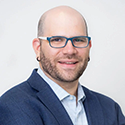
Jonathan Friedman
Sy Syms Managing Director, U.S. Free Expression Programs
PEN America
Jonathan Friedman, PhD, is the Sy Syms managing director of U.S. free expression programs at PEN America. In this role, he spearheads the organization’s work in the U.S. to safeguard freedom of expression, particularly the unhampered transmission of literature, art, and ideas. This includes overseeing national advocacy for the freedom to write, read, and learn; research and public commentary; partnerships with educational and cultural associations and institutions; and efforts to foster a culture of free expression in society writ large.

Jackie Gardina
Senior Director of Institution and System Programs
AGB
Jackie Gardina is the senior director of institution and system programs at AGB. Before joining AGB, she served as the dean of the Colleges of Law, with campuses in Santa Barbara and Ventura, and as the associate dean and professor of law at Vermont Law School. Upon graduation from law school, she clerked for Chief Judge William Young of the U.S. District Court for the District of Massachusetts and then for the Honorable Levin Campbell of the First Circuit Court of Appeals. She recently completed an Ed.D. in Higher Education Management at the University of Pennsylvania.
Subscribe to AGB podcasts on these platforms: