
 Chat with AGB Board Bot
Opinions expressed in AGB blogs are those of the authors and not necessarily those of the institutions that employ them or of AGB.
More than half of current college presidents/chancellors plan to step down in the next five years, according to the American Council on Education’s American College President 2023 survey report.1 In this environment, the search for a new president/chancellor will be high-stakes; whomever the board chooses will set the tone for the next chapter of the institution, system, or related foundation. For governing boards and search committees that must begin such a search, AGB’s A Complete Guide to Presidential Search for Universities and Colleges, Second Edition provides detailed guidance, some of which is included here.
Effective boards and search committees recognize that their board professional (BP) is a trusted advisor who can help navigate the process. A BP coordinates logistics, such as managing confidential communications, records, and relationships with external consultants to protect the integrity of the search. A BP also understands the history and culture of the organization, which helps guide governing boards and search committees to recruit the best candidates.
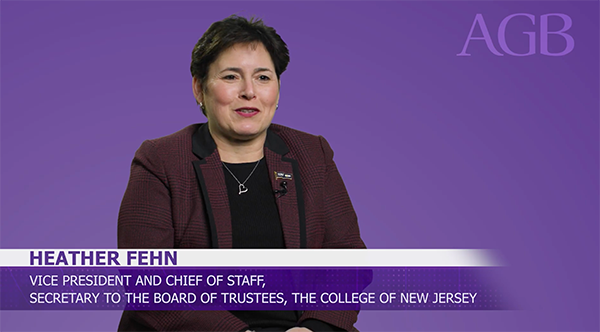
“There’s nothing that is more important than the relationship between: the board professional and the consultant; the board professional and the board chair; and the board professional and the chair of the search committee,” said Heather Fehn, vice president, chief of staff, and secretary to the board of trustees at the College of New Jersey. “It is critically important that all of those people are in lockstep throughout the course of a search.”
Laying the Groundwork in Today’s Environment
BPs know that a successful presidential search begins long before the candidates’ applications and interviews. Even before the announcement that a president is departing, an effective governing board develops a strategic succession plan that focuses on the organization’s long-term needs and objectives, providing a clear direction for the transition. The BP is instrumental in helping the board start this process early, through such actions as organizing a strategic board retreat.
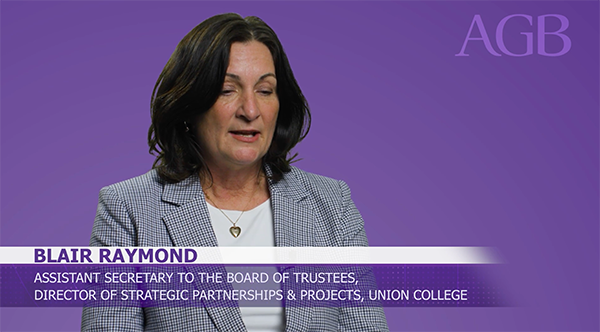
“The board professional can help the board with succession planning in a lot of ways. We had a board retreat, and I brought in a board consultant. We really talked about presidential transition, the environment into which this person is coming, who we are as an institution, and where we want to go,” said Blair Raymond, assistant secretary to the board of trustees and director of strategic partnerships and projects at Union College. “I felt that that was a very helpful opening conversation. Not everybody, truthfully, was on the same page at the retreat when we talked about this, and so I think that the board professional can help guide that journey of figuring out what a president needs coming into the college in just a few short months.”
However, BPs also understand that flexibility is key in today’s presidential search landscape. In the current highly competitive environment, governing boards must remain nimble to attract the best candidates.
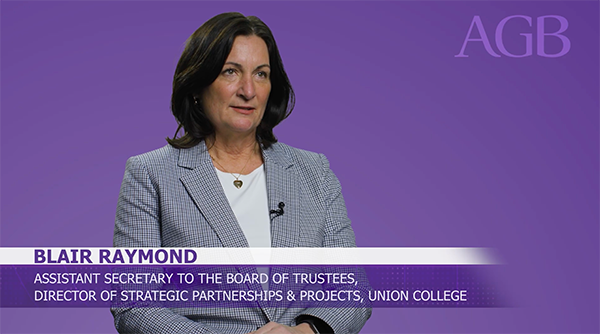
“I would advise other people going into a presidential search to keep in mind that you might have to pivot. Presidential searches are likely going to be with a smaller candidate pool, more competitive than maybe our last presidential search,” said Raymond. “We had a candidate come in who was very competitive, and knowing that there were other presidential searches going on in other liberal arts colleges nearby, we really had to accelerate the search.”
Ensuring Inclusive Excellence and Transparency
Many stakeholders might expect a seat at the table during the search process, so the BP suggests the most effective ways to involve them. Members of the campus community, donors, alumni, and other interested parties must perceive the search to be fair and that the new president/chief executive is the right “fit” to ultimately be successful, so the BP’s relationships with these stakeholders are important.
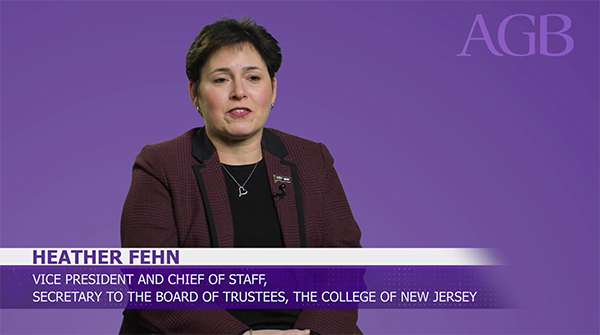
“Board professionals can help board chairs and boards navigate the challenges of presidential searches by really serving as a conduit for the community and the board…to reassure the community that the board has the institution’s best interests in mind,” noted Fehn. “Make sure that the board and the search committee itself pay attention to things like culture—it’s critically important.”
The composition of the search committee is critical to stakeholders’ confidence in the validity of the search. The committee must have the right mix of individuals to conduct an effective search for the best new leader. The BP advises the board chair and the chair of the search committee to consider:
- What technical expertise is needed on the committee?
- Are all constituencies—students, faculty members, staff, alumni, board members—included and representative in terms of race, gender, background, and tenure?
- Can each member maintain confidentiality and work collaboratively?
However, the BP also understands that search-committee membership is not the only tool for engaging important stakeholders. Advisory groups and listening sessions can be just as meaningful. Regular updates to the campus community also help build trust and reduce the risk of misinformation spreading. The BP develops a communication plan that keeps stakeholders informed without compromising candidates’ confidentiality. This plan might include publishing a search timeline, distributing surveys to gather input on desired presidential qualities, and facilitating presentations to educate stakeholders about the search process.
Supporting the Search
Throughout the search, the BP is a collaborative partner with the board, committee, and external consultants. The BP ensures the process complies with all applicable rules and regulations; documents feedback from stakeholders; coordinates interviews and campus visits for candidates; and supports committee members by collecting candidate evaluations and reference checks. The BP’s professionalism and attention to detail help the committee focus on its core task: recruiting and recommending the best possible candidates.
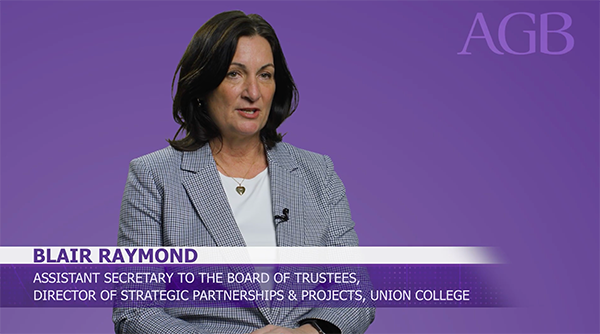
“I wasn’t a member of the search committee, but the search firm, the board chair, the committee chair, and I met every other week,” said Raymond. “I felt it was really important for me to be there for the interviews, and so I offered to schedule the meetings for the search committee and the committee members. It was a lot of work, but it was worth it.”
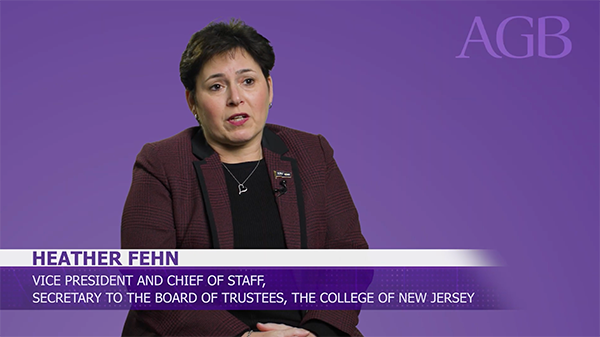
“I think it’s really important for the board professional to remind a search committee that these searches are two-way streets,” added Fehn. “Search committees and boards are interviewing candidates, but the candidates are interviewing boards, the leadership, and the institution as well. It is very important that search committees and boards are selling just as much as they’re interviewing.”
As the search concludes, a well-managed transition, supported by the BP’s organizational skills, sets the stage for the new president’s success and reinforces the committee’s and the board’s credibility. The BP helps draft communications about the final selection, coordinates the logistics for the new chief executive’s introduction to the campus community, and documents the process for future reference.
Conclusion: The BP as Trusted Advisor
The BP’s role in a presidential search is multifaceted: part project manager and part trusted advisor. By ensuring the search is inclusive, transparent, and well-organized, the BP helps the board fulfill its most important duty—selecting a skillful leader who will guide the organization into the future. A successful presidential search that finds the right person will strengthen the institution’s governance, culture, and mission. The BP’s steady hand is essential in this process.
AGB used AGB Board BotTM in the development of this blog post to help summarize recommendations from our extensive library of content.
1. Danielle Melidona, Benjamin G. Cecil, Alexander Cassell, and Hollie M. Chessman, The American College President: 2023 Edition (Washington, D.C.: American Council on Education), xi.
RELATED RESOURCES


Trusteeship Magazine Article
The Pick and the Process

Reports and Statements
2025 AGB Survey of Board Professionals