
 Chat with AGB Board Bot

Opinions expressed in AGB podcasts are those of the speakers and not necessarily those of the organizations that employ them or of AGB.
What will the midterm elections mean for higher education? In this episode, Joe Brenckle speaks with Tom Sullivan, an AGB board member and president emeritus and professor emeritus of law and political science at the University of Vermont, as well as Penn Hill Group’s Alex Nock, about the potential for shuffling leadership in Congress and covers the latest higher education policy news.
Aired: October 30, 2026.
Podcast Transcript
Joe Brenckle
Welcome to our AGB Public Policy Podcast discussion today, focusing on the look ahead, the policy landscape for higher education in 2027. We’re heading into the final stretch of 2026, and there’s still a lot left to do on the policy front here in Washington. And an even bigger question looming over everything is: what will the midterm elections mean for higher ed in 2027? Congress still has a lot of work to do on its funding, college athletics, foreign funding, transparency, immigration, and other issues affecting colleges and universities. At the same time, this election could significantly change the balance of power in Washington and the relationship between Congress and the Trump administration.
So today we want to do two things. Look at what still needs to get done before the end of the year, and then let’s look around the corner and see what higher ed leaders and governing board leaders should expect in 2027. I’m joined by two people who bring very different and very valuable perspectives to our conversation. Alex Nock is a principal at Penn Hill Group, AGB’s public policy partner in Washington, and he has more than 25 years of experience in federal education and public policy and previously served as a deputy staff director on the House Committee on Education and Labor.
He’s also been involved in virtually every major federal education and policy debate over the past several decades and has been a regular guest on our podcast. Also joining us is Tom Sullivan, an AGB board member and president emeritus and professor emeritus of law and political science at the University of Vermont. Tom is a constitutional law scholar, former university president, provost, and law school dean, and the co-author of The U.S. Presidency: Power, Responsibility, and Accountability. Tom also recently co-authored an op-ed examining what the midterm elections and a potentially divided government could mean for higher ed, congressional oversight, and the balance of power between Congress and the executive branch.
Alex and Tom, thank you so much for joining us. I’m reminded of that curse, which is “may you live in interesting times.” These certainly are interesting times.
Tom Sullivan
Pleasure to be with you. Thank you.
Joe Brenckle
Well, let’s talk about the big picture. Alex, before we get to the election, Congress has a really short window to finish up its work before the end of the year. When you look at the higher ed agenda, what are the two or three issues you think that governing boards should be watching most closely between now and the end of the year?
Alex Nock
Yeah, Joe, and nice to be here and be here with Tom. Thanks for inviting me back. First and foremost, the biggest thing the Congress has to wrestle with is fiscal year 2027 funding. So we are one month into the fiscal year, and we still don’t have a complete budget or complete set of appropriations bills. For long-time listeners of this podcast, Congress has traditionally not gotten their work done by the end of the fiscal year. So the end of the calendar tends to be the more natural time for them to figure out appropriations bills. Will that happen?
Joe, you teed up that we live in interesting times, and there’s an election coming up here that obviously will [have an] impact, whether or not members are in a position to work on funding bills. I think they’ll try. At a minimum, Joe, expect a continuing resolution to be extended past the current December 11th date that the current CR or continuing resolution has in it. But also, Congress may try to actually get appropriations bills done. I will say, Joe, the idea though that Congress can get a labor, HHS, education appropriations bill done, the main bill that funds higher education programs, is probably a really tall challenge. You know, there may be some other bills that get done, but I’m not sure about whether or not the education funding bill gets done.
And of course, another big thing that impacts universities out there is the National Defense Authorization Act, or what we sometimes in DC call the NDAA. That is something that Congress, for the past 66 straight years, I believe, has passed before the end of the calendar year. It’s the big policy bill that directs all of the DOD funding around there. That is gonna be a big priority for members to get done. This year is a little tougher, though, with the president asking for a much higher level of defense spending than was provided last year by the Congress. And you have a bit of a split between Republicans and Democrats on how to do that.
But that bill also carries a lot of things that can affect higher education policy as well. And then, Joe, actually, we are recording this on the 28th of October. Tomorrow we will see the accreditation regulations from the US Department of Education. Joe, I think we might have even done another podcast on that in the past. So folks can go back and listen to that. This will be the final rule, and that’s not Congress’s action, but it is a really big thing that’s gonna start to impact higher education.
AGB Policy Note
Quick note: since we recorded this conversation, the Department of Education has finalized its accreditation rule with no substantive changes from the regulations proposed in August. The rule takes effect July 1, 2027. Learn more.
Joe Brenckle
Great. Thank you, Alex. Tom, what are your thoughts? Do you think this is going to be a productive lame duck session, or do you think they’ll kick the can down the road for the next Congress?
Tom Sullivan
Well, first let me thank Alex for that terrific summary; very accurate indeed. Well, my impression, listening and watching and being in and out of Washington often, is it’s probably gonna be very much a lame duck session. I would like to be optimistic, like I heard in Alex’s voice about passages between now and January 3 when the new Congress will assemble. But I don’t think that’s gonna happen. I think maybe because the Senate has already passed an NCA bill—we can talk about that in detail later—maybe the House will come back to Washington after such a long period out. And I think another reason why it’s unlikely that we’ll see material advancement in the Congress before January 3 is: I’m concerned that—depending upon how this election in six days comes out and we may not know for a day or two—but I think there could very well be substantial litigation very soon after the results are out. And I think that’s gonna take all the air out of the conversation in Washington and elsewhere.
And the polls might suggest that the House may go over to the Democrats. I want to be careful with citing polls because we know they’re not completely accurate all the time, but I’m concerned about post-election reaction and the litigation that may ensue, and that will repolarize and politicize the whole process. And we’ll be off on that track rather than the good points that Alex just mentioned that are pending in the Congress right now.
Joe Brenckle
Thank you, Tom. Another issue that is hanging out there is college athletics. As you both know, the Senate approved the Protect College Sports Act 77–22 in September, but the House obviously still has action if they’re gonna pass it. And this is something that AGB is closely following. We’re holding a convening next month here in Arlington that brings together higher ed leaders to talk about college athletics. But I wanted to get your thoughts. What do you think that Congress will actually get done on the college athletics front?
Tom Sullivan
I think there is an opportunity, perhaps back to Alex’s calendar that he mentioned, for the House to take a look at that and maybe a bipartisan agreement. As I understand the bill, and of course it’s subject to amendments, I understand the bill has certain limitations on the student caps and restrictions on the amount of money and the so-called older term pay-to-play or the “payment for services” beyond the academic cost, tuition, scholarships, books, et cetera. But there is no limitation, I understand, proposed now for any limitation on coaches’ salaries. That is still highly controversial.
We have scores and scores of coaches, I understand from the news, who make over five million dollars a year. And so that is there a level playing field there somewhere between regulating students and regulating salaries. Importantly, for any of that to happen, both houses are going to have to pass an antitrust immunity in some way. Otherwise, that clearly runs afoul of the antitrust laws. So that will be a big part of any bill coming, is the immunity provision and the sweep and depth of it. And then I think we’ll get into another discussion before it ever gets passed in the House, quite frankly.
Alex Nock
Yeah, Joe, I think one of the biggest challenges I think with that bill is the Congressional Black Caucus came out opposing it early and often in the process. The bill also—so there is a problem on the House Democratic side with that bill. And it certainly got a bipartisan vote in the Senate. You can’t not acknowledge that. You know, 72 votes, I think you said, Joe. That’s an impressive thing when you get 70 out of 100 to agree on anything in the United States Senate. I think the other challenge is the House Republicans, who are looking to do their own bill and struggle to bring it to the floor, also want to affect collective bargaining rights of student athletes. They do not want student athletes classified as employees for the purpose of collective bargaining provisions. And that’s a pretty big deal for the House Republicans. So you kind of have two major chunks of people who are opposed to the Senate bill as it is right now, and Tom very aptly said, of course, it’s subject to amendment and change. But in terms of what they pass, there are some major challenges.
Look, if Cruz and Cantwell, the chairman, Ted Cruz, and the ranking member of the Senate Commerce Committee, Cantwell, essentially tried to tackle the employee students as employees’ issues, they wouldn’t have gotten a bipartisan bill in the United States Senate. So I totally understand why they left that out. That does seem to be a really big priority for House Republicans. So where’s the middle ground on that? Either you’re an employee, or you’re not an employee. Either you can collectively bargain, or you can’t. And I think that’s a really hard division to get through. On the pro side of why this bill may go somewhere is it does have the support of the Big Ten and SEC, two major powerhouse conferences, both basketball and football, in there. So there is certainly an outside influence, so to speak, that is certainly seeking that. It’s almost like the immovable object and the irresistible force, and we’re gonna see who winds up winning. I will say, though, counting on Congress to kind of get their act together in the span of, like, you know, I think it’s the House has 22 days, and the Senate has 25 days they’re in session. That doesn’t bode well for a deal in that short period of time. But this issue isn’t going away either way.
And if you know this isn’t done this year, I would suspect, you know, the Senate to, regardless of if—Tom mentioned the House flipping—regardless if the Senate flips or not, you know, I expect people to want to bring this issue up. And you know, the Senate bill has a lot of bipartisan support. So I think this issue is the furthest it’s gotten, and it’s not gonna go away even if there isn’t action this year.
Tom Sullivan
Joe, I would just add to that summary by Alex. You mentioned in your introduction about AGB and the board of directors and the fiduciary and legal obligations and what our institutions may be looking for. I think there’s a real concern here on the cost, the substantial cost of this package for players. There’s a number out there now. We have, of course, basketball going on. But I understand that each year that cost per conference per school is gonna go up very significantly, almost doubling perhaps each year. Who’s gonna pay for that? Major donors right now, I think, are stepping up to fill that gap.
One has to be concerned perhaps about influence there. In terms of larger university fiduciary duty responsibilities and decision-making, do we raise tuition? From where does that escalator come from? And I think that’s going to be a major concern on our college campuses as we look at the cost of that and how it gets paid for per conference, per school. And quite frankly, having been a faculty member and an administrator in three of the major conferences, I’m pretty sure that the bottom half of those teams cannot afford—they couldn’t afford it before, and I think they’re really gonna have to struggle with the money side. That introduces the board of trustees of each university to figure that out.
Joe Brenckle
Thank you both. Let’s turn to the main event: the election. I think depending on what happens, if the Democrats take control of the House and potentially the Senate, what do you think the big changes are gonna be for higher education policy in Washington? You know, these are gonna be changes legislatively; these are gonna be changes in committee leadership and congressional priorities; and obviously the dynamic between Congress and the Department of Education will shift dramatically. So I’d love to get both of your takes on what we think will change after the election.
Tom Sullivan
Well, Joe, assuming one of the houses, the Senate or the House, changes, automatically we now have divided government, as it’s called, where the Congress has at least one house that is of a different political party than the president. All of a sudden, that chamber is gonna be able to begin to exercise oversight responsibilities under the Constitution, Article I, subpoena power for documents and witnesses to really review what has taken place in the last 21 months in the Trump 2 administration. So oversight, constitutional oversight responsibilities. Of course, if it’s the House, the House has, under Article I, power of the purse. Budget appropriations, all of the money comes out of the House.
And again, I think we’ll see much more oversight, investigations, subpoenas, witnesses, public hearings, not unlike the January 6th hearings that we saw earlier in this administration. And I think that may well tangle Washington up significantly on many different fronts. Whether the issues are, as mentioned a moment ago by Alex, accreditation, NCAA, Pell grants, federal grants, research grants, and visas. So one could go the entire hour talking about all of the particular restrictions that have been put [in place]. Much of this is being litigated right now in our federal district courts or courts of appeal.
That’s going to continue, and that will escalate, I think, under divided government. And higher education is right in the middle of that with all of these restrictions. And I would also mention, finally, one of the biggest restrictions here, and challenges under the Constitution, is free speech and expression on campus and regulations that attempt to restrict or censor or chill in any way speech and expression, including curricula. That is a major constitutional problem, and that will come to the fore, I think, with oversight responsibilities of either chamber or both.
Alex Nock
I totally agree with everything Tom said. Oversight is gonna be a really, really big deal. I think part of the challenge around money here is that unless the Democrats get 60 votes in the Senate, there’s still a filibuster. And you’re still gonna have to have a bipartisan set of appropriations or funding bills coming out of that body. And what we’ve seen in recent years, especially, is pretty much whatever party’s in charge of the House shoots way over to their side. More right or more left on the funding bills.
Again, if you assume the House flips here—but depending on who wins, you know, the House and Senate, like Tom was saying—if you know Rosa DeLauro is your chair of the House Appropriations Committee, Democrat from Connecticut, she’s gonna shoot to do big investments in healthcare. Big investments in education. Certainly, Joe, we for several months or years now have been worried about the Pell Grant shortfall. We did a podcast that touched on that. There’s no way the Pell Grant is going to get cut under Rosa DeLauro’s watch. And to be fair, it hasn’t been cut under Tom Cole’s watch either. So just, both parties seem concerned about that.
But I just don’t see Rosa during her two years at least of her tenure as chair presiding over any reductions in the Pell Grant. At the same time… At the end of the day, the Senate tends to have more power to shape that appropriations bill because they need to get 60 votes. I actually think on the funding bills, the real battle will be on the riders. Tom mentioned this. Like, how are you going to constrain the administration riders or provisions?
For our audience, just so they know, so we’re not talking DC here, Joe—riders are provisions often on appropriations or other big bills that essentially may not be directly related to the bill, but provide some sort of guardrails or constraint around, typically, an administration and their actions. And in this case, you know, Tom mentioned research funding and the cuts there. You know, how they’ve administered grant programs and whether or not they’re going to follow the dictates of Congress. Look for a lot more, I think, guardrails being talked about. And if the Democrats are in charge of a chamber, they have more leverage to probably get them. Now, certainly. The administration can veto bills, right? And then you get into the whole “can you override the veto” sort of thing. But I think the reality here is the administration has shown they’re willing to accept some guardrails because they often think they can pivot to the next thing to kind of get, you know, at what they want. We’ll see, but that’s gonna be really, I think, a big challenge.
Just for our listeners, Joe, you mentioned the election, if things change. I do not think a big massive Higher Education Act reauthorization is in the offering, almost no matter what happens.
Tom, you touched upon some of these—I guess the fair word might be polarizing issues that affect higher education, whether they be free speech, college athletics, you know, all the research grant issues, DEI and related issues. None of them are really easy to legislate on. There’s not an easy middle ground where we probably would have found it by now, right, on a lot of these issues. So, how do the parties come together? If you did a higher education act reauthorization, lots of social issues impacting higher education would be on the table. And that might be a harder thing. It’s a similar issue to the rider conversation on appropriations bills.
One change we definitely know about, or two changes, Joe, if the House flips. You are more than likely to get Bobby Scott from Virginia as your chair of the House Education and probably then named Labor Committee. When the Democrats take over the House, they typically rename the committee and call it the Education and Labor Committee. He is being challenged by two members of Congress, Jahana Hayes from Connecticut and Suzanne Bonamici from Oregon, for that spot. Mr. Scott, Chairman Scott, ranking member Scott, has been the top Democrat, I think, since 2015, since George Miller left and retired. I think it’s very likely at this point he probably wins that election for chair.
We’ll have to see. It’s a vote that the House Democratic caucus takes, but my guess is he wins that election. So we will have a new chair, and it’s more than likely to be Bobby Scott. And actually we know, Joe, on the Senate side, we’re gonna have a new chair no matter what happens with the election, because Bill Cassidy from Louisiana lost his primary earlier this year, so he is not coming back to Congress. Obviously, if the Senate flips, Bernie Sanders will be your chair of the Senate HELP committee, Health, Education, Labor, and Pensions Committee. If the Senate doesn’t flip, Bernie will be your ranking member. And then who will be the Republican chair is a little bit of a question.
The way to look at this is that if Susan Collins wins her election, she will stay chair of the Appropriations Committee in the Senate. That would then open up Lisa Murkowski from, Joe, your Alaska, to become the chair in this case of the HELP Committee. If Susan Collins loses, Murkowski very likely takes the top appropriation seat for Republicans. That means then that your next person up for the Senate Health Committee on the GOP side is Roger Marshall from Kansas. He is in a very tight reelection battle. If he wins, he would be your top Republican or chair, or ranking member in that case. If he loses, then probably next up is Josh Hawley from Missouri. And that’s probably where it stops, because Josh Hawley’s not up in cycle.
So that is a lot of musical chairs that you just have to follow. So for our listeners who want to know who’s in charge of education policy in the Senate, did Collins win? Did she not win? And then you can follow that down. So definitely new voices. The one static there is, of course, Senator Sanders from Vermont. You know, he’s gonna continue to be the top. He is not a Democrat, he’s an independent, but represent Democrats at the top of that committee.
Tom Sullivan
Joe, I would just add to that excellent review by Alex. There’s so much there, and the leadership changes are going to be so significant, perhaps, that I think the nightly news is mostly going to be about today’s litigation over every one of these issues, as opposed to a good-faith, common-sense, let’s come together and get some legislation passed for the people. I really think that outline that Alex mentioned is everything that should be on the table, and we really need desperately in higher education, but I think it’s going to be more litigation-centric than it is actually walking across the aisles and working together on these very complex but important issues in higher education.
Joe Brenckle
Well, the musical chairs aspect of it is part of my favorite aspect of elections. So I’m excited for that. I do have a curveball I’d like to throw at you both. So we’ve talked about oversight; we’ve talked about the opportunities for both sides to lock horns to maybe get a little payback. But in your opinion, do you see any areas where both sides could possibly work together?
Alex Nock
Yeah, I can start with that, Tom. So again, you’re not gonna have Bill Cassidy coming back, so his priorities will not be the priorities of the HELP committee, even if Republicans maintain the majority in the Senate. We’re expecting Senator Murkowski, if she is the top Republican chair ranking member, to want to focus on workforce and career and technical education policy. Those certainly can have an impact on the higher education space.
Bobby Scott, Representative Scott, if he’s the top Democrat on the committee, or if Tim Walberg remains the chair, that committee, both of them have shown a great deal of interest in working on workforce and career and technical education policy. I think there’s a lot of challenges, though, Joe, to traditional higher education policymaking in the Congress. Look, if Democrats capture control of the House. The House is a simple majority vote. They will probably try to advance legislation.
Representative Scott has a bill called the LOAN Act, which does three big things that he, I’m sure, is gonna have an early markup on, you know, should he be chair of the committee in 2027. It doubles the maximum Pell Grant in terms of funding for that. I don’t believe it addresses the shortfall issue. It was introduced before that, Joe. But I’m sure Scott would look to do something on that as well. It reduces interest rates on student loans and comes up with a repayment program that Congressman Scott would point out is more generous than what’s on the table or more beneficial on the table for student borrowers, right?
So more akin to maybe Biden’s SAVE plan rather than the current administration’s RAP plan that was adopted through the reconciliation bill last year. But that bill. probably would not be able to be brought up in the Senate, even if the House passed it. Even if Democrats control it, we’ve talked about, right, Tom, you need 60 votes in the Senate. And there’s not going to be 60 votes for that. So look for policy activity, but getting something to the White House that the president could consider signing or vetoing that’s like traditional higher ed policy—I think would be challenging. The one exception, this is not traditional higher education policy, is college sports. If college sports is not done this year. There are a lot of people who want a deal on that. Tom went over some of the real challenges with reaching that deal in terms of the policy area. And I augmented it with a few of my thoughts. So big challenges, but I could see eventually a deal coming in that space, but that’s not traditional Pell grants and student loans and work study and other things like that that we might be used to from years past.
Tom Sullivan
And that’s all about money, so it may get top priority.
Alex Nock
Fair enough, Tom. Fair enough.
Tom Sullivan
I agree with everything Alex said with regard to that. And I did hear the night before last a quote from our president that said, if the Democrats win, I’ll veto every bill coming out of that Congress, period.
Alex Nock
He did say that.
Tom Sullivan
That may not always apply, but at least the warning has been sounded. And hence the lame duck definition or characterization.
Joe Brenckle
Tom, we’re gonna put you on the spot for a little bit. As someone from Vermont, could you offer us any perspective on what you think Bernie Sanders might tackle as chairman?
Tom Sullivan
Well, I think that Alex was heading exactly in the right direction. I of course I can’t speak for the Senator. But knowing the Senator as well as I do, I think you’ll see kind of a big better bill coming out for workers and welfare reforms and Medicare for all, et cetera. That’s Senator Sanders’ whole life’s commitment, and with the chairmanship, even in a divided government, I think you’ll hear a lot from Senator Sanders.
Joe Brenckle
Excellent. Do either of you have any other outstanding issues you want to bring up?
Alex Nock
One thing about the lame duck, Joe, this will be—so nerd alert for our listeners here. So this might get a little nerdy on top of the nerd alert that this podcast sometimes already advertises to its listeners. So one thing that’s, I think, a little different about this lame duck, Tom, and I have both talked about the number of days, the challenges, the impact of the election. So if Democrats do capture the majority, i.e., they are the incoming majority after January 3rd, right, Tom, when the Congress flips. That means the current majority of the GOP is a lame duck majority, right? They are trying to move bills when they know, gosh, in two months we’re out of power. So there’s always a question in these final two months or so, before the new Congress starts, of who shows up to work. And we’ve already seen members—frankly, from both sides of the aisle, who’ve been retiring, but probably a few more Republicans and Democrats—already not show up for votes in a timely way, even before the lame duck period. When you’re in a lame duck period, and you’re not showing up for votes, there’s not much your constituents can do to make you show up. They can’t vote you out or recall you. You’re gone in two months, right? So who shows up for work?
And if the Republicans are in the incoming minority, we do expect challenges to Speaker Johnson and challenges to now majority leader Scalise for their positions, right? So the natural order of things would be if the party of the majority becomes the party of the minority, the leadership of that party in the House just takes a step down. There is no speaker in the minority, right? So the speaker becomes the minority leader, the current majority leader becomes the whip, and et cetera, et cetera.
Well, you already see a kind of unspoken, but everyone knows it’s coming, challenge from Jim Jordan from Ohio to whoever, whether it be Johnson or Scalise; there have been mixed messages from the speaker about whether or not he would want to stay in leadership. You know, in the minority. He’s currently saying he would. So, but he has raised some questions about his position. But I do know there’s no way Steve Scalise wants to be leapfrogged by Jim Jordan, and I mean this with no disrespect to the speaker, to the majority leader, or to Congressman Jordan, but that’s not a recipe for helping resolve bills if the Republicans are fighting over who leads them. Now that probably gets resolved in November, but if they’re fighting for the whole month of November and they only have three weeks in December, that doesn’t bode well for the legislative agenda.
Tom Sullivan
To the last point, Alex, I happened to catch the noon news on CNN with an interview with the speaker just an hour or so ago. And he said unequivocally, “The Republicans will win the House, and I will be the next speaker.” And he had his full-throttled enthusiastic political hat on as he was speaking that. Joe, you mentioned what we might expect or concerns. I’ve already mentioned my concern about litigation post-election. But let me go to January 3, which Alex just opened up that conversation for us. On January 3, the Congress is required to come in and to receive from the states, Secretary of States, this certification of who won the elections. That’s the receiving of the certification.
So first, you can have challenges, and we assume, again, if divided government is on the horizon, that there will be state challenges, state lawsuits. And one question is, how does that delay in any way affect January 3, which is constitutionally required? So there’s a big problem. Second, let’s assume that the states are able to forward their certifications. The House clerk is lawfully to receive the certifications unless there’s a challenge. Now, under the Constitution, there probably will not be a valid challenge because of its age, its residency, and I’m assuming all the candidates have met the constitutional challenges. But Article I also talks about the House having jurisdiction over the elections and the validity thereof.
So all of a sudden, and I think this is Alex’s point, too, before we get to a lot of that, we have the election of the speaker. So who gets to vote for the speaker’s office? And it turns out that the House clerk, I understand, will accept the certifications as delivered from the states, or may not select, and the ones selected, I think, are called members-elect. And they then go into a pool who are able to vote next on the speaker. So this is Alex’s point a moment ago. How do we achieve the next speaker in light of polarization and politicization? So assume, of course, that there’s a person duly elected that’s been challenged; the Speaker has not accepted that. And put the person on the members-elect list, you got lawsuits going on right and left in every state. So that’s a real dilemma on January 3rd. And if they proceed, now the speaker gets to select, and there is a House clerk, but the speaker between now and then could change that and put someone in more amenable to the speaker’s wishes, and all of a sudden this clerk of the House begins to really make these judicious and lawful and constitutional decisions. And I see a real problem there on January 3rd.
If we don’t get the certifications from each state, if they’re challenged, there’ll be lawsuits in the states, there’ll be challenges in federal court in Washington, and everybody’ll look at each other and say, what do we do next? So that’s my real concern, assuming divided government, one house goes over to the Democrats.
Joe Brenckle
Thank you both. Obviously, a lot to play out over the next several weeks. But one thing seems to be clear. This election will not end the higher education policy debate. It will continue to reshape it. So for governing boards, presidents, and institutional leaders, that means paying close attention not only to individual regulation or pieces of legislation, but also to their larger relationship among Congress, the administration, institutions, and the public. Alex and Tom, thank you again for joining us.
Tom Sullivan
My pleasure. Thank you.
Alex Nock
Thank you, Joe.
Speakers

Joe Brenckle is the director of strategic communications at AGB, where he advances thought leadership in higher education governance. Brenckle has successfully shaped national narratives through roles with the U.S. Senate and major nonprofits, specializing in strategic messaging, crisis communications, media relations, and stakeholder engagement. He holds degrees from Georgetown University and the University of San Diego, and has been recognized for driving impactful, mission-aligned campaigns nationwide.

Alex Nock is a principal at Penn Hill Group, a bipartisan lobbying and consulting firm in Washington, D.C. At Penn Hill Group, Nock advises an array of clients across the full spectrum of policy areas. He helps clients identify and secure their policy goals with Congress, the administration, and congressional and presidential campaigns. He brings more than 25 years of experience in federal education, disability, labor, and health policy and funding to Penn Hill Group.
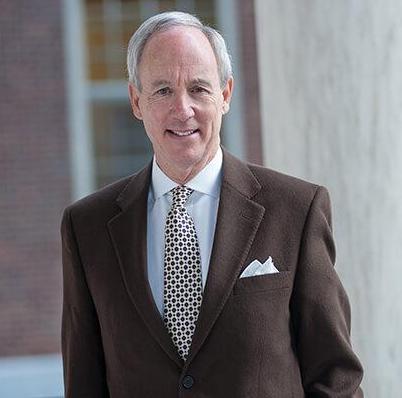
E. Thomas “Tom” Sullivan is a member of AGB’s Board of Directors, a distinguished legal scholar, a higher education leader, and an expert in constitutional law and antitrust. Over a career spanning more than five decades, he has demonstrated a profound commitment to education, legal scholarship, public service, and academic leadership. Sullivan currently holds the title of president emeritus and professor of law and political science at the University of Vermont (UVM), where he served as president from 2012 to 2019.
Subscribe to AGB podcasts on these platforms:



RELATED RESOURCES

Reports & Statements
Top Public Policy Issues Facing Governing Boards in 2025–2026