
 Chat with AGB Board Bot

Opinions expressed in AGB podcasts are those of the speakers and not necessarily those of the organizations that employ them or of AGB.
As political pressures on higher education intensify, how can governing boards protect institutional autonomy while ensuring accountability and public trust? In this episode, Inside Higher Ed Co-founder Doug Lederman is joined by National Association of College and University Attorneys President and CEO, Ona Alston Dosunmu, and Northwestern University President Emeritus, Michael Schill, to explore the growing challenges of political interference, the importance of academic freedom, and the critical role of trustees in safeguarding their institutions’ missions. Their conversation examines how boards can uphold their fiduciary responsibilities, support institutional leadership, and maintain effective governance amid external pressures.
Aired: October 30, 2026
Podcast Transcript
Introduction:
Welcome to the Trusteeship Podcast from AGB, the Association of Governing Boards of Universities and Colleges. Governing boards and institutional leaders are navigating difficult questions about political pressure, public accountability, and the boundaries of their responsibilities. Earlier this year, AGB convened a panel of higher education leaders to discuss urgent governance issues around institutional autonomy. We’re pleased to welcome back three of those leaders for our conversation today. Our moderator, Doug Lederman, is the co-founder of Inside Higher Ed. Ona Alston Dosunmu is president and CEO of the National Association of College and University Attorneys. And, Michael Schill is the former president of Northwestern University and the University of Oregon. Today, we’ll explore what’s at stake for higher education and what boards can do to protect institutional independence, strengthen governance, and stay focused on their institution’s missions. Thank you all for joining us. Doug, I’ll turn it over to you.
Doug Lederman:
Great to be here. At the AGB event in DC earlier this year at which both of you spoke, other speakers describe situations from the last couple of years in which state politicians had intervened in board decisions about leadership and in ways that seemed to violate a lot of accepted norms. And I was at an event in New York City recently where Jim Ryan, the former president of the University of Virginia, recounted how the US Justice Department had pressured some like-minded members of the university’s board to force him out. So Michael and Ona, thanks again for being here today. Why have we been seeing increasing willingness on the part of some politicians to tread into higher education governance and autonomy more than before? And what are the risks to higher education and perhaps to democracy from that tendency? Michael, let’s start with you.
Michael Schill:
Sure. I think one thing that we should recognize is that this isn’t altogether new. Number one, the legal structure of independence of universities and autonomy is not that clear. And what has happened in recent years, for example, the Dear Colleague letter under the Obama administration, that was basically a threat to the universities that they were going to do a Title IX investigation if you didn’t agree to what their regulations were, even though the regulations were not promulgated in the way that normal regulations are promulgated. So that’s sort of an antecedent. Now, the Trump administration took that to an entirely new level. But also you can see courts, the SFFA case undermining Grutter basically undermines the idea of universities being autonomous and able to make decisions as to who their students are.
I think the second argument is, we’re more vulnerable than we have been perhaps in my lifetime. We’ve lost the trust of the Americans. That makes us vulnerable to attack from the outside. And then, I think if you look at this, this is not isolated to the United States. Authoritarian governments are hostile typically to independent universities. Why? Because independent universities are offsetting centers of power. And when you are authoritarian, you don’t want that. And that is exactly why it’s so important in a democracy to have these offsetting intermediary organizations, like universities, and it’s so important to be insulated and able to do research on what we decide we want to do research, say what we want to say, even critique the government. That’s incredibly important in a democracy. And as government infringes on that, infringes on academic freedom, infringes on institutional autonomy, we lose some of what makes our democracy so special.
Doug Lederman:
Thank you for all those points I totally agree with, I appreciate the historical perspective. There’s definitely history here and it has been bipartisan in certain ways, although as you say, this administration has taken it to put it on steroids. The only other thing I would add in your really good list is the loss of respect for a lot of institutions. That’s one of the things that, we’ve seen attacks on the press, but we’ve seen the loss of respect for and an increasing attacks on a lot of different types of traditional institutions in addition to post-secondary higher education institutions. That’s really helpful context. Ona, what are your thoughts on that?
Ona Alston Dosunmu:
I just come back to this being a period, and I think the historical context is super important, but I really was going to nail down and zero in on this era being one of norm busting and hostility and mistrust with all institutions. It’s not just higher ed. And at the same time, I think that some recent events have made it easy for politicians to use higher ed to score political points. And I’m not sure that as a nation, we have valued higher ed in America for the treasure it truly is. I think all of those things can be true at the same time. Folks can be kicking higher ed around for the purpose of scoring political points and not necessarily value it. And in fairness, I don’t think that any of us or any sort of serious observer of American higher ed would say it’s perfect.
There are absolutely some legitimate concerns and I think the risk and the fear thereto, certainly with respect to national security and scientific research, because I think that that is a real concern. And I know we’re going to talk about accountability a little bit later. Michael touched on this though. While I do think that accountability and transparency is important and there are a lot of efforts afoot to improve that with respect to American institutions, I think that having an educated populace is critical to democracy. There’s a reason Viktor Orbán came for universities in Hungary. Without institutional autonomy, I fear that our institutions of higher ed, our colleges and universities will self-censor and constrain both what they say and what they do at the professoriate level, at the student level, but also at the research level before they even get started. And that is, to me, one of the big risks that this current moment is really bringing forward.
Doug Lederman:
For sure.
Michael Schill:
If I could interject one other point is-
Doug Lederman:
Please. Sure, Michael.
Michael Schill:
… also we didn’t talk about political polarization in the nation, in the world. And part of what’s happening, I think, which is making these attacks on institutional autonomy more effective is you have super majorities in legislatures which are appointing board members in ways that maybe they didn’t in the past who are partisans and they can do it because they have the power to do it. And so they can fully change existing norms. And then that’s a relatively more recent phenomenon.
Doug Lederman:
Lots of good points and things to return to. I do want to come back to the point Ona made about we can all bemoan and worry about this trend. I don’t want to pretend that there aren’t problems in higher education. I started a column earlier this year on Inside Higher Ed called Tough Love, which represents my take, which is that higher ed’s got work to do to be better. So how do we balance the autonomy that we’ve all agreed is important with the appropriate demands from governments and politicians for accountability given the heavy public investment, federal, state, individual in post-secondary education? Ona, maybe start with you on that one.
Ona Alston Dosunmu:
The balance. I think the point is well-taken that not only does the federal government and do state governments make a tremendous investment in both higher education and directly and through supporting historically at least through supporting research, although that too is coming under attack in a variety of ways. Higher education is not a monolith. Not every institution is bringing the same sort of resources to the table. I think many higher education observers and leaders feel, A, they’ve been working on these problems all along, and B, the one-size-fits-all sort of cudgel approach is going to have all sorts of unintended consequences.
Give you a quick example of some of the efforts that I know about. Probably everyone who’s listening is familiar with the American Council on Education, ACE. They recently unveiled an effort National Student Success Project that underlines most of the same things that the administration underlined in their recent call to action. They talk about things, like strong value for the investment, advancing academic excellence, empowering students with clear and affordable pathways to get their degrees, cultivating an educational community that promotes civic dialogue and supports all of the students in an educational community. I think that those things are happening and the risk and the concern and the pushback from the higher education community is really around using a blunt instrument instead of a scalpel and not recognizing the diversity and how vast the higher education landscape is. And I just want to make one other point really quickly, and that is that it’s not just governments that are making investments, it’s families and individuals. And I think politicians feel like, “Hey, our constituents are demanding that we do something about particularly the cost,” I think it’s a big piece.
Doug Lederman:
Yeah. Michael, just on this question of appropriate, historical and continued oversight versus inappropriate, et cetera, how do you think about that line? We’ve talked a little bit about what we’ve seen that’s gone past it, but how do you think about the line and how we get back to it?
Michael Schill:
I’m sympathetic to the argument that government puts money into higher education, both for private universities and for public universities, and so has some need for accountability. On the other hand, there are some aspects of universities that are so core to what we are, such as academic freedom that has to be protected. The faculty are accountable for what they do in terms of what their research is, how they teach. And really, we have boards of trustees who are the intermediary between the government and the university faculty who are the people who are to keep us accountable. Now, there’s certain lanes that they should be in and protecting and not interfering with curriculum and research is one of those, what I would say, lanes that we need to protect. But there is a role for government that is more direct and that is through appropriations. What government shouldn’t do and what this government has done is use an appropriation to get you to knuckle over on something that is entirely unrelated to the appropriation. That to me is inappropriate. It’s not accountability. It is just sheer force.
Doug Lederman:
So appropriations is obviously one thing governments can do. There’s obviously also regulation and we’re seeing this administration move on so many fronts. And I guess one of the tricky things is the question of some of the behaviors and pressures we’ve seen on higher education on governance have come from trustees who’ve been appointed maybe through different mechanisms or different criteria, et cetera. So I’m curious, how do we handle internal incursions into good governance from board members themselves as opposed to government pressure on boards? But like the UVA example that I heard Jim Ryan talk about recently, these were board members who’d been appointed who were working and sympathetic to the politicians externally. So maybe, let’s talk just a little bit about how we ensure good board behavior by trustees themselves, and Michael, start with you.
Michael Schill:
Yeah, I think this is, I’m doing research on this, so my comments are from a much broader base than just Northwestern and Oregon. Part of it is boards need to be unified behind certain principles and that’s important and that doesn’t happen, we don’t wait until the crisis occurs. We get unified on these principles beforehand and that takes preparation, it takes training, things that AGB does with board members. And this also takes changes I think to structure. You can’t be united among principals if you have too big a board. You need a board where people can talk to each other, where everybody feels a responsibility to pitch in and prepare and isn’t the kid sitting in the last row of the big law class. You also need, I think, a level of culture and trust, both of confidentiality for what is not a public record, also that people will not go behind the board and start talking to the press outside of the board. I don’t think that’s good behavior. We’ve seen that in one major public university recently, and there should be norms, rules, maybe even internal rules to deal with that.
But also, who are you putting on the board is really important. What has happened over time is, at least with private universities and in some public, is you’re increasingly having wealthy donors on the board. I love wealthy donors and I think they have a lot to add, but not to the exclusion of other voices. And what’s missing on boards frequently is nonprofit organizations and people who understand universities. One of the reasons why that’s so important is we are odd ducks. Universities are odd institutions. Most people from business think, “Okay, president tells the faculty to do something and they do it.” Well, that’s not the way universities work and no one who’s been president would ever tell you that they could just tell a faculty member what to do. And that’s partly because we believe in shared governance.
We also don’t have one overriding objective. It’s not just profit. We have lots of different objectives. We have many stakeholders and they each think they’re most important. So we need to balance that and board members need to understand the nuance and get comfortable with the nuance. That is important then when crisis occurs, that we actually know we’re in this together, we accept that we’re in this together, and that instead we’re not a circular firing squad, which we’ve seen in some universities. And then, the last thing I’ll mention is just boards need to be publicly behind their leaders. And if they’re not, if they feel they cannot, particularly during this period of withering attack, if they feel they cannot, then they have the wrong president and they need to make a change, but they can’t just be agnostic to the leadership and allow that leadership to get attacked and not be there to provide support.
Doug Lederman:
Ona, thoughts on that internal focus?
Ona Alston Dosunmu:
Yeah, sure.
Doug Lederman:
Other than your laugh out loud when Michael talked about telling-
Ona Alston Dosunmu:
I realized this is an audio medium and people could not see me. I was nodding vigorously, and I think the two of you can attest that I was absolutely agreeing 100% with what Michael was sharing. I have a lot of reactions. And the first one is really basic training. I think some of what we’ve seen, particularly with respect to publics is, people not behaving as if their fiduciary duties run to the institution and instead behaving as if their fiduciary duties run somewhere else. We’ve all heard the basic duty of care, duty of loyalty, duty of obedience. That is to the institution, not to the friend who recommended you for the board or the politician who appointed you to the board, and I think that that is a really tough message. I don’t have a magic wand. Maybe AGB has a secret formula for communicating that to board members, but I think that’s extraordinarily important.
I was vigorously nodding along to once boards become so large, they can no longer function as boards are intended to function. And what I would advise, and I sit on boards in that director role and you hear noses in, fingers out, and with respect to supporting the president, I think most good presidents, and Michael’s one of them, really appreciate being challenged, having people red team ideas, having folks play devil’s advocate. You can only have trustees do that if there is confidence and trust and a culture of openness on the board if they are confident and trusting that what John Smith or Jane Doe said isn’t going to get repeated outside of the boardroom. There was a recent incident of someone, now this is Michigan, which has elected board members, but who felt that they had a greater duty to the folks who elected them than to respect the confidentiality of a boardroom.
I don’t know how anyone operates in that environment, but I’ve always been of the mind that vigorous debate, discussion, disagreement, challenge in the boardroom, but unified once a decision is taken, the board has acted as a unit and that is the board’s decision and it’s not second-guessed or revisited necessarily outside of the boardroom. And so I just think that that is super important, but that’s a cultural thing and that takes a long time to build up. I did want to add one other practical suggestion.
Michael mentioned you don’t want to have to experience or test your board’s trust and unity and all of those things in a crisis. And if you can get boards to do it, I think that simulations and scenarios when you’re not in crisis is a great tool. Figure out where the red lines are for your institution when there’s no problem so that when the problem comes, you have a sense of who’s going to speak on behalf of the institution. Is it the board chair or the president or someone in communications? Does everyone understand that they can’t just pop off to the media outside the boardroom? Working through that with a potential scenario, I think, is a good exercise.
Doug Lederman:
I was going to try and bring us to a close by focusing on exactly that point, which is we see lots of different examples where institutions are not prepared, not just on board governance, but on lots of things. I’ve seen it around the free speech or the difficult speech. You’re not going to teach a campus how to engage around difficult issues on an October 8 after an October 7. That’s too late. And so similarly, you’re not going to do well with a board governance crisis if you haven’t done some practice or set some ground rules. So if we could just maybe close, and I think you both touched on this a little bit, but if you have some practical guidance for how boards prepare when things are quiet-ish for when they’re not, what are a couple of thoughts? Michael, for you please.
Michael Schill:
So I think what happens on some boards, and I think it’s related to what both of you are talking about, is the president tries to keep the board at a distance, and so board meetings can become dog and pony shows. And what you want is you want vulnerability on the part of the president, you want trust, which is what Ona said. And so you need to establish that. You can only establish that hitting the same point if you have a smaller board, if you can develop, understand, see each other as human beings with shared norms. And so talking about these things in advance in training sessions about setting your red lines as Ona said, and getting comfortable with the uniqueness and the specialness and the incredible wonderfulness of universities as a unique institution, you got to get comfortable with them. You shouldn’t be looking at them and saying, “Boy, this is odd. I can’t understand why the faculty are doing these things. We should change it.” You shouldn’t be on the board because you don’t understand the university.
Doug Lederman:
I think that last example is great because it’s not crazy for people who are not from our strange world not to understand it. So some explication, it’s not crazy to think that some board members actually need to be taught some of this stuff or shown some of this stuff. I totally agree with you that if they’re not getting it, there’s a problem there. But I do think that that’s part of the training potentially. It would be ideal if it wasn’t necessary, but I do think it is. Ona, last thoughts from you.
Ona Alston Dosunmu:
I completely agree, and I think starting with and reminding even people who’ve been on the board for a very long time, just refreshing memories for folks who are more tenured and sharing with people who are new. What is the mission of the institution? What are the values of the institution? And how do those show up in action? It’s easy to have values written down on a piece of paper, but in the community, how do they show up? Bring in real world examples of this means that in the classroom, this is our expectation. This means that at the president’s cabinet, this is our expectation. And in the boardroom, this is our expectation. And so I keep coming back to scenarios and real world examples being way more helpful probably than overloading folks with reading materials and hoping that they get it. So I think you all hit all of the important points. I am confident that our institutions will weather this storm and come out stronger on the other side and I’m deeply grateful to both of you and to AGB for including us.
Doug Lederman:
I think that’s a perfect way to close the conversation. Michael Schill and Ona Alston Dosunmu, thank you very much.
Speakers
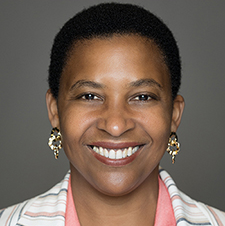
Ona Alston Dosunmu
President & CEO
National Association of College and University Attorneys
Ona Alston Dosunmu is the president and CEO of the National Association of College and University Attorneys (NACUA). Prior to joining NACUA, Ona served as the inaugural C.E.O. and Executive Director of the California Lawyers Association. Before CLA, Ona spent over 16 years in various roles at The Brookings Institution in Washington, DC, where she established Brookings’s first Office of General Counsel and served as Vice President, General Counsel and Secretary, and Chair of the Inclusion & Diversity Committee. She holds a BA in Journalism and an MA in Sociology, both from Howard University, and a JD from Georgetown University Law Center.

Doug Lederman
Co-founder
Inside Higher Ed
Doug Lederman is a higher education journalist and analyst, writing and speaking widely about the industry and advising nonprofit organizations and companies about strategy surrounding higher education. He served as editor and co-founder of Inside Higher Ed from 2004 to 2024 and is now a columnist there. Before co-founding Inside Higher Ed, he served in a variety of roles at The Chronicle of Higher Education from 1986 to 2003. He began his career as a news clerk at The New York Times. He grew up in Shaker Heights, Ohio, and graduated in 1984 from Princeton University.

Michael Schill
President Emeritus
Northwestern University
Michael H. Schill is the president emeritus of Northwestern University, where he served from 2022-2025. He is currently a professor of law at Northwestern Pritzker School of Law, and a professor of finance and real estate in the Kellogg School of Management. Schill previously spent seven years as president of the University of Oregon. Schill is a nationally recognized expert in property, real estate and housing law and policy. He served as dean and professor at the law schools of the University of Chicago and UCLA, and also held tenured faculty positions at New York University and the University of Pennsylvania. He holds an Schill AB from Princeton University and a JD from the Yale Law School.
Subscribe to AGB podcasts on these platforms: