

 Chat with AGB Board Bot
Opinions expressed in AGB podcasts are those of the speakers and not necessarily those of the organizations that employ them or of AGB.
Who wants to be a college president, and what does it take to succeed in the role? In this podcast, Melissa Trotta, associate managing principal and senior vice president of AGB Search, speaks with Thomas Gibson, chancellor of the University of Wisconsin–Milwaukee, and Roderick McDavis, former president of Ohio University and managing principal and CEO of AGB Search, about leadership, governance, student success, and the evolving demands of the presidency.
Aired: June 23, 2026
Podcast Transcript
Introduction:
Welcome to the Trusteeship Podcast from AGB – the Association of Governing Boards of Universities and Colleges. Today, we’re exploring a question that’s becoming increasingly important across higher education: who wants to be a college president, and what does it take to succeed in the role? Dr. Melissa Trotta, the Associate Managing Principal and Senior Vice President of AGB Search is joined by Dr. Thomas Gibson, Chancellor of the University of Wisconsin–Milwaukee, and Dr. Roderick McDavis, former President of Ohio University and Managing Principal and CEO of AGB Search, for a candid conversation about leadership, governance, student success, and the evolving demands of the presidency. Let’s get started – Melissa?
Melissa Trotta:
Hi, I’m Melissa Trotta. I’m the associate managing principal and senior vice president of AGB Search. Today we’re diving into a question that’s getting more complicated and more important by the year. Who actually wants to be a college president? It’s a role that sits at the center of high expectations and constant pressure, leading institutions through financial uncertainty, political scrutiny, and rapidly changing student needs. So what does it take to step into that job today and what makes leaders choose to lean into the challenge? To explore these questions, we’re joined by two guests who know this role from the inside. First, a current college leader who’s navigating these challenges in real time. Dr. Thomas Gibson serves as chancellor at the University of Wisconsin-Milwaukee. Tom brings a deep commitment to student success, academic excellence, community engagement, and financial stability. Welcome, Tom.
Tom Gibson:
Hello and thank you, Melissa. I really appreciate having this conversation with you today.
Melissa Trotta:
Thanks, Tom. Great to have you here. And we have a former president who can reflect on the role with some distance and perspective, but also with the insight of a partner to higher education hiring authorities. Dr. Rod McDavis is the managing principal and CEO of AGB Search, an executive search firm serving the higher education sector. Rod has led the firm for more than nine years, serving as a trusted advisor to institutions as they navigate the recruitment of presidents, chancellors, and other key leadership positions. Rod, welcome.
Rod McDavis:
Thank you, Melissa. I am delighted to be here with Tom to join in the conversation regarding the presidency.
Melissa Trotta:
Wonderful. Thank you, Rod. So together, Tom and Rod are going to help us better understand what’s changed, what hasn’t changed, and what the future might hold for the higher education presidency. Let’s get into it. So the first question, Rod, is for you. I’m curious what inspired you to become a college president and when did you know that this was a professional goal for you?
Rod McDavis:
So what led me to this opportunity, Melissa, was wanting to make a difference. I felt like I started in higher education as a faculty member back in the ’70s and from the earliest time I just felt like the best way to try to make a difference for students, for faculty, for staff to try to better an institution was to serve as its leader. So very early on, I had the ambition of wanting to serve as a president and that carried me through my years as a faculty member and then ultimately to becoming a dean and ultimately to becoming a provost and then president. So for me, the desire was really a focus on how to help make an institution better, how to serve students, how to make sure that students’ lives would benefit from the institution that I served as a leader of, and ultimately wanting to put all of the experience that I brought to the opportunity to be a president to culminate in helping to make that institution a much better place than it was before I got there. Tom, what about you?
Tom Gibson:
So Rod, believe it or not, it wasn’t a singular moment for me. Rather, it was a culmination of moments and experiences beginning as a undergraduate student through student employment, having exposure to mentors who really guided my undergraduate experience. It was also having a wonderful undergraduate experience and really having my first moments of service to others. It was those moments that really inspired me to want to help more people succeed. And it wasn’t until I became a cabinet member, a vice president with some proximity to the presidency that I believed that I could make a difference in helping, again, more students succeed, strengthening the institution and ensuring that faculty and staff had the resources that they need to ensure that students could achieve their dreams at our respective institution.
Melissa Trotta:
Great. Thank you to both of you for your responses. Tom, I’m going to stick with you for a minute here and ask now that you’re actually in your second chancellorship, is there anything that’s been especially surprising to you about the role that you didn’t anticipate?
Tom Gibson:
Well, I always understood the importance of building coalitions of support, I just didn’t fully understand the magnitude of the time that I would dedicate to relationship building and relationship stewarding. At UWM, we enjoy about 215,000 living alumni and approximately half of them reside in the Milwaukee area and region. So that affords a lot of engagement opportunities, which I really appreciate, but it also consumes a considerable amount of time. So balancing relationship building and management has been a significant surprise for me, particularly in my second chancellorship and our institution being located in the largest metropolitan area within the state of Wisconsin.
Melissa Trotta:
Thanks, Tom. Just the sheer amount of time that it requires to deliver on the job.
Tom Gibson:
Absolutely. And that is in addition to everything else that you’re charged with accomplishing as a president or chancellor.
Melissa Trotta:
Excellent. Thank you. So Rod, let me turn to you here and switch gears a little bit and ask what you think makes for a positive and productive working relationship with a board chair or board of trustees, board of regents, a governing body.
Rod McDavis:
I think the central point to having a great relationship with the board chair and members of the governing board, Melissa, is developing the relationship. You have to know each other, especially the board chair and the president. They have to spend some time together just getting to know each other. And then once they get to know each other, the question becomes, how do we get on the same page with the direction that we want the institution to move in? And I think that that takes just a lot of conversation. It takes a lot of sharing of ideas, sharing of thoughts, developing, if you will, a game plan for where the institution needs to go and how to get it there. And then it also then requires time to spend with each of the other members of the governing board to try to get to know them, but then to also try to figure out what they see as the vision for the institution.
I think everything that revolves around a good relationship with the governing board comes down to the strategic vision for the institution. Once the president has a clear vision for where the institution needs to go and the board chair shares that same vision, then if the other board members share that same vision, now you’re all on the same page. I think that one of the biggest issues today with presidents and governing boards is that they’re simply not on the same page. The president might want to go one way, the board might want to go another way, and the board chair might want to go a third way. So again, I come back to that basic point that you have to get to know each other first as human beings. There’s two people, the board chair and the president. And once you get to know each other, you have to sort of hash out what do we see as the vision for the institution?
Once we can agree on that, then we get the rest of the board to buy into that. And then obviously we want members of the university community to start to buy into that as well. So it becomes a shared vision. It becomes a shared vision with the board, becomes a shared vision with the constituents within the university community, and once everybody has that shared vision, the institution can move forward.
Melissa Trotta:
Thank you. And Tom, let me ask the same question of you. So as a chancellor in the universities of Wisconsin system, you report to the board of regents. And so tell us a little bit about how you’ve built a productive working relationship, a little bit about what that looks like.
Tom Gibson:
I think Rod said it exceptionally well. Trying to establish those personal relationships as early as possible is key. And then additionally, ensuring that there is good understanding on the clarity of roles. What’s within the board’s purview and what are the decisions that are the chancellor’s authority? That can help resolve a significant number of issues or concerns when you have that understanding upfront. And certainly it is my hope that those engagements with the board chair and individual regents would lead to trust and mutual respect. And as Rod noted, having a strong understanding of what the shared goals and vision for the institution will be critical to the success of the institution and its ability to attract resources and opportunities for students, faculty and staff.
And the other point that I would share is it’s critically important for the university’s president or chancellor to share the same sense of urgency on particular initiatives that have been advanced by a particular board. And as a chancellor within the Universities of Wisconsin, while I report directly to the system’s president, but we support the direction, the vision and the strategic priorities of the board, but we ensure that it aligns with campus needs and capabilities and the expectations that our campus community and stakeholders have for our institution.
Melissa Trotta:
Thanks so much. Rod, I’m going to turn back to you. As a former president yourself and a long-term president, you were president of Ohio University for 13 years, and now you’ve worked for almost a decade with a lot of boards and board leadership on presidential and chancellor searches. What would you advise a board chair or the head of a board of regents or board of trustees in working successfully with a new president to set them up for success?
Rod McDavis:
I think Tom made a great point and I want to lift it up from the standpoint of role clarification. I think there’s a role for the president to play or the chancellor to play as the lead person of the management team within an institution and there’s clearly a role for the board chair to play. The board chair certainly has oversight of the board but has that macro sense of what the institution is all about and where it’s going. And I think the best relationship that can be developed between a board chair and a new president is for the board chair to say, “Listen, let me explain what I see my role as being.” And the president to say, “Let me share with you what I se my role as being.” And the two have to hash that out. They have to hash that out to the point where there’s a clear understanding of the role of the president or chancellor and the role of the board chair.
As long as there’s some clarity around what the role is, then I think you avoid conflicts, you avoid misunderstandings, you avoid situations where the president and the board chair may not be on the same page. I think in addition to what I said earlier in terms of getting to know each other as individuals, you also have to focus in on that role. So the president has some statements and makes clear what he or she believes that role would be and the board chair does the same thing and talks about this is what I think my role is, and it’s very helpful in terms of keeping the board at the level that it needs to be in terms of oversight. One of the other issues we’re seeing across the country today is that when the board starts to micromanage, you have problems because that’s getting into the president or the chancellor’s domain.
You want to be clear about what the roles are and then you want to try to stay in your lane as best you can. So I think Melissa, what I would say to a board chair is listen. The best advice that I can give you is have that conversation with the new president, have that conversation with the new chancellor, clarify what you see your role being, make sure that the president or chancellor understands what’s here, what his or her role will be, and stay in your lanes as you go through your tenure as board chair and president.
Melissa Trotta:
And Rod, how do you assess whether you’re achieving success in the presidency? As you think about your 13 years in that role, how did you keep track of progress and determine whether you were being successful?
Rod McDavis:
I think it’s a question of what are your goals? What are your annual goals? And this is, again, where you have to be very, very clear and if possible, you state goals that have some quantitative measures. Now, you can also certainly have qualitative measures to whatever goals you set, but if you’re very, very clear at the outset about what your annual goals will be, it doesn’t have to be 10 or 15. It can be four or five, can be three. It can be some small number of goals that at the end of the year, you can take an assessment of the progress you’ve made toward achieving those goals. Now, some of those goals I think Melissa will be goals that will take longer than a year. So you get progress reports on those goals in terms of what steps did you take to move forward with the implementation or the completion of that goal?
There will be other goals that you can set for a year. Let me use an example of retention. Let’s say you want to increase your retention over a period of three years and you want to do it incrementally. So at the end of that first year, you simply are reporting, this is where we stand today on increasing our retention. And then you do that on an annual basis, but that’s just an example of the type of quantitative goal that you can put before the board to say, this is what we’re going to try to do. Fundraising might be another area where you’re saying you want to raise so much money over a period of years, but you want to do that on an annual basis so that you’re raising so much money within that year.
So at the end of the day, what you want to try to do is to state in clear terms what your goals are for that particular year and those goals ought to be tied to where you want the institution to move. So it shouldn’t just be personal. It shouldn’t just be individual. Your goal should be institutional goals as a president or a chancellor that helps give the board an indication of how the institution is moving forward so that at the end of that year, you can state clearly, this is the progress that we’ve made and this is what we have yet to do and you want to do that every year so the board has a clear understanding of the progress you’re making to making the institution a better place.
Melissa Trotta:
And Tom, let me pose the same question to you as well. Clearly now you’re in your second chancellorship in the system there. So obviously you did an excellent job in the first one and then you were pointed into a second role. But how did you personally as the chancellor assess whether you were meeting your goals, how you’re achieving success along the way?
Tom Gibson:
Sure. So first and foremost, these institutional goals need to be shared goals, shared goals among the system president, among the board of regions and among the colleagues on campus who are going to help you execute on these goals. Like Rod, I preferred goals that could be measured. So when I think about the work that I do at UWM, the metrics that always is top of mind for me is ensuring that I’m sustaining and helping to enhance academic excellence as well as strengthening our research enterprise. The financial health of the institution is extremely important and I’m always concerned about the institution’s reputation and how we are securing additional and external support for the institution. Those are metrics that I routinely revisit throughout the academic year to determine whether or not if I’m moving the needle. And then obviously student success outcomes.
Rod mentioned student retention. That’s a metric that I engaged with colleagues on several times a academic year to ensure that our persistence numbers are positioning us well for student retention as well as degree completion. So while there are a number of different institutional metrics and priorities one could focus on, you need to be certain that you’re focusing on the metrics and the initiatives that will have the greatest impact for your respective institution.
Melissa Trotta:
Excellent. Thank you. So one closing question for both of you and Tom, we’ll start with you on this one and that’s what advice would you offer to those in our audience who are aspiring college or university or system presidents? Do you have advice that you would share with them?
Tom Gibson:
Sure. So it’s a piece of advice that I always share and that is to know your why. Why do you want this role? Why do you do this role? Knowing one’s why allows you to have something that’s deeply personal to you to lean on during moments of challenge. And trust me, there will be moments of challenge, but if you have this why, and my why is rooted around this notion of helping more students succeed, more students get across that graduation stage. So when I’m feeling challenged, sometimes part of that why is reflecting on the prior students that I’ve supported and thinking about their journeys and how they were able to be successful at our respective institution with intentional support and our dedicated faculty and staff. I lean on those memories and I lean on this goal of helping more students succeed as the energizing force that I need to ensure that the work that I do endures.
Melissa Trotta:
Rod, how about you?
Rod McDavis:
Yeah, I think Tom stated it well with the why. I would simply add to what he shared with two additional comments. One is understand that the role of president or chancellor is long-term, that it’s a marathon. It’s not a sprint. You don’t have to get everything accomplished in the first six months, the first year, even the first few years. So understand that as you are developing your strategic vision in consultation with members of the university community as well as with the board, that those are goals that are long-term goals. Yes, there will be some short-term accomplishments that you will experience, but you want your goals to be down the road. How will the institution look in three years? How will it look in five years with the leadership that you are providing? So understand that it’s a marathon, that it’s going to take time to accomplish the goals that you set, that moving an institution forward is not an easy task. It is time-consuming and each increment, each little step that you take is a major step forward in terms of helping the institution become a better place.
And the other thing I think, Melissa, that I would share is don’t forget about you. Don’t forget that you need time away. Don’t forget that you need to refresh, that you need to regroup. So take the time that you need to take care of yourself. Yes, you want to put your all in all into making the institution the very best place that it can become and these jobs are 24/7. So don’t be fooled by looking at some president and saying, oh, that looks pretty easy. No, these are not easy jobs. These are very hard jobs. They’re very time-consuming and you have to take care of yourself. So when you have the opportunity to take time, take that time, refresh, regroup, come back energized, come back with a fresh outlook. So those are two points I think, Melissa, that I would share with anybody that aspires to be a president. Understand it’s a marathon and take good care of yourself as you’re on that journey.
Melissa Trotta:
Thank you so much. Thank you to our guests today. That’s Dr. Rod McDavis and Dr. Thomas Gibson. You shared so many interesting thought-provoking insights with us so we sincerely appreciate your time and your remarks and we hope this conversation has offered valuable insight into the evolving role of college and university presidents and chancellors and what it takes to be successful in the role.
Tom Gibson:
Thank you.
Rod McDavis:
Thank you.
Speakers
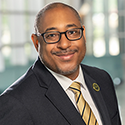
Thomas Gibson, EdD
Chancellor
University of Wisconsin-Milwaukee
Thomas Gibson has served as chancellor of UW-Milwaukee since July, 2025. Previously, he served as chancellor of UW-Stevens Point from 2021 to 2025 and as a professor in the School of Education. Prior to that, he served as vice president for student affairs and vice provost at Bowling Green State University, associate vice president for student affairs at Ball State University, and associate dean of student development at York College. He holds a bachelor’s degree in mass communication from Eastern Connecticut State University, a master’s in education from the University of New Haven and a doctorate in educational leadership in higher education administration from Johnson & Wales University.
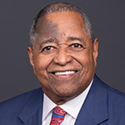
Roderick J. McDavis, PhD
Managing Principal and CEO
AGB Search
Roderick J. McDavis is managing principal and CEO of AGB Search, where he leads executive search and leadership development services for higher education institutions. Formerly president of Ohio University for 13 years, he was the university’s first African American president where he led major strategic, fundraising, and academic initiatives. McDavis has also held senior leadership roles at the University of Florida, University of Arkansas, and Virginia Commonwealth University. McDavis is widely recognized for his expertise in higher education leadership search, governance, and institutional strategy. He has led numerous searches for university chancellors, presidents, provosts, vice presidents for advancement, and other senior university leaders.

Melissa Trotta, EdD
Associate Managing Principal and Senior Vice President for Client Development
AGB Search
Melissa K. Trotta is associate managing principal and senior vice president for client development at AGB Search. She has more than 25 years of experience in higher education leadership at universities, including Georgetown, Harvard, and Johns Hopkins, as well as over a decade as an executive search professional. She has partnered with a wide array of institutions on searches for presidents, chancellors, provosts, deans, vice presidents, and other senior positions, with a focus on the alignment of the candidate with institutional needs and priorities. Trotta is also a frequent speaker on higher education executive search and leadership transitions.

Subscribe to AGB podcasts on these platforms: