
 Chat with AGB Board Bot
Opinions expressed in AGB blogs are those of the authors and not necessarily those of the institutions that employ them or of AGB.
Many higher education governing boards and chief executives are operating in extremely difficult environments. Colleges and universities are facing new threats to institutional autonomy, cuts to federal funding, and changing requirements for institutional data, to name just a few. Yet these leaders should understand that they have a trusted colleague and adviser to help steward the mission of their institution, system, or related foundation: their board professional (BP).
The BP’s role is constantly evolving. At many institutions, a volunteer trustee originally held the job and was primarily responsible for managing logistics for the board. However, most of today’s BPs are full-time staff of the institution, related foundation, or system who juggle many responsibilities. They are institutional historians, analysts of contemporary events, and trusted prognosticators who help ensure that the board’s work is aligned with their organization’s mission and strategic direction.
Governing boards and chief executives should appreciate how their BP (or BPs, if multiple) can help them anticipate and navigate the unprecedented challenges facing higher education, provide critical context, foster a collaborative board culture, and advance their organization’s mission. Amidst the challenges in higher education, BPs remain informed about governance trends and can offer positive solutions to issues facing boards, so it is critical that trustees consider how to support and develop their BPs.
A Strategic Linchpin for Effective Governance
A BP (sometimes called the board secretary) is integral to the governance ecosystem of an institution, system, or foundation. In AGB’s publication The Role of the Board Professional, Charlene K. Reed, vice president and university secretary at Kent State University, describes the BP as “the glue that connects the board, the president, the institution, and key stakeholders.”1 BPs are deeply aware of the governing dynamics in their organization, which helps them facilitate successful relationships among the president, the board, senior administrators, faculty members, staff, students, and other stakeholders to achieve its strategic mission.
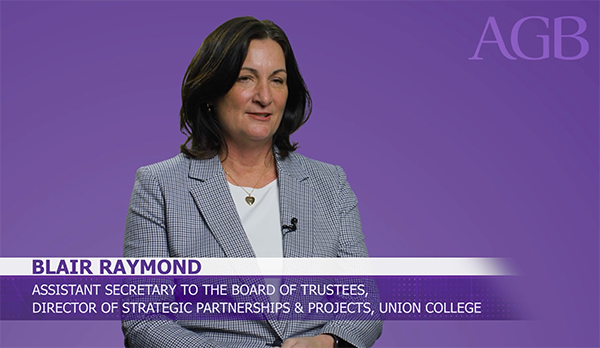
“I think board professionals have quiet power. We really do have a front seat to a lot of important discussions, both at the college level and at the board level,” said Blair Raymond, assistant secretary to the board of trustees and director of strategic partnerships and projects at Union College. “Being a thought partner to the president and earning the trust of the board chair are really important. We are in unique positions to speak up when we’re asked. And I think our perspectives are increasingly more important the more they understand what a board professional can do.”
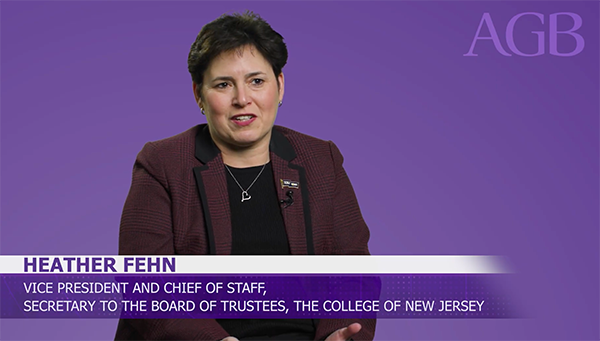
“The most satisfying parts of being a board professional are really the relationships that we build across the institution,” said Heather M. Fehn, vice president and chief of staff, and secretary to the board, at the College of New Jersey. “The success of an institution is what this is all about. At the end of the day, it’s about the institution: the mission of the institution, its students, its faculty, its staff. That’s why these positions are so important.”
A BP’s unique vantage point allows them to understand the needs and perspectives of all stakeholders—board members, presidents, faculty, staff, and students—and to ensure that everyone is moving in the same direction.2
Facilitating Board Engagement
BPs help the board focus on its strategic priorities. They play a critical role in board orientation and continuing education, so that board members focus on the right strategic topics and understand their roles, to avoid overstepping into areas better left to administrators. They are also proactive, transparent communicators with extensive knowledge of their institutions’ policies, processes, and culture. BPs engage board members, gently counsel trustees who might be less active, draft correspondence on behalf of the board and chief executive, and help develop meeting agendas.
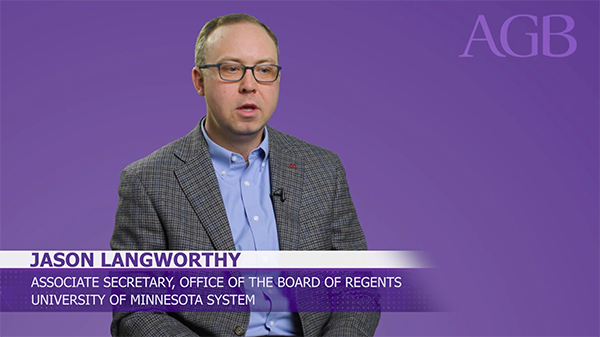
The BP’s value to board members is in “helping them to understand the types of things that we can do to help support their governance and to help support their work within the board,” said Jason Langworthy, associate secretary, office of the board of regents, University of Minnesota Systems. BPs also demonstrate their value through their actions, he noted, “making sure that your board meetings run well and having robust agendas with consequential issues.”
Conclusion
A BP is an unsung hero whose work nevertheless is critical to effective governance. Board members and chief executives who recognize the strategic value of this role—and who empower their BP as a true partner—will be better positioned to achieve their mission and navigate the ever-changing landscape of higher education. By ensuring clear communication and helping governing boards, presidents, and senior administrators understand their respective roles, BPs can help leaders focus on the most crucial aspects of their strategic mission.
AGB’s upcoming Foundation Leadership Forum on February 1-3, 2026, in San Diego, as well as the Board Professionals Conference on March 26-28, 2026, and the National Conference on Trusteeship on March 28-30, 2026, in Denver will explore these topics, providing useful insights for foundation, system, and campus board professionals, board members, chief executives, and other higher education leaders.
AGB used AGB Board BotTM in the development of this blog post to help summarize recommendations from our extensive library of content.
1. Charlene K. Reed, The Role of the Board Professional, (Washington, D.C.: AGB, 2017), 2.
2. AGB, “Board Professional Certificate Program: Lesson Three,” accessed October 8, 2025, https://agb.org/bpcertificate.
RELATED RESOURCES

Reports and Statements
2025 AGB Survey of Board Professionals

Trusteeship Magazine Article
Elevating Boards