
 Chat with AGB Board Bot
Opinions expressed in AGB podcasts are those of the speakers and not necessarily those of the organizations that employ them or of AGB.
Aired: June 2, 2026
In a time of market volatility, inflation concerns, and growing financial pressure across higher education, how can colleges and universities ensure their endowments remain both resilient and mission-aligned? In this episode, AGB’s David Bass speaks with Kyle Adams of Cerity Partners about the evolving role of the outsourced chief investment officer (OCIO) model and what boards and investment committees should expect from their investment partners today. Together, they discuss how institutions of all sizes can strengthen decision-making, navigate uncertainty, and position their endowments to support long-term priorities.
Disclosures
Please read important disclosures here.
Cerity Partners OCIO LLC (“Cerity Partners OCIO” or “CP OCIO”) is a wholly-owned subsidiary of Cerity Partners LLC (together with its affiliates, “Cerity Partners”). Views expressed are as of the date recorded unless otherwise indicated. Client data is as of February 28, 2026.
The NACUBO-Commonfund Study of Endowments, which is available for purchase, provides an annual analysis of endowment investment returns, asset allocations, and governance policies and practices at hundreds of U.S. higher education institutions and affiliated foundations. Cerity Partners OCIO is a corporate partner member of NACUBO and sponsors certain NACUBO events. Certain CP OCIO clients may have participated in the study. NACUBO data is as of June 30, 2025.
Cerulli Associates provides market intelligence and strategic business for the financial industry. The Cerulli US Outsourced Chief Investment Officer Function 2025 Report, which is available for purchase, explores the evolving OCIO landscape, including market sizing, forces of growth, demand and needs across client segments, use of OCIO search consultants, and the various challenges facing providers.
“CapEx” refers to Capital Expenditures. “Fed” refers to the Federal Reserve. “RFP” refers to Request for Proposal.
Click to Read the Podcast Transcript
Recorded on May 14, 2026
Introduction:
Welcome to the Trusteeship Podcast From AGB, the Association of Governing Boards of Universities and Colleges. In a time of market volatility, inflation concerns, and growing financial pressure across higher education, how can colleges and universities ensure their endowments remain both resilient and mission-aligned? AGB’s David Bass speaks with Kyle Adams of Cerity Partners about the evolving role of the outsourced chief investment officer (OCIO) model and what boards and investment committees should expect from their investment partners today. Let’s get started – David?
David Bass:
Well, Kyle, it’s great to see you today. Thank you so much for joining us. I’m looking forward to our conversation. Before we dive into our discussion about making the most of your investment partnership, I’d like to ask you about the current investment environment. What are the issues that are of greatest concern to your colleagues and what are you hearing from the investment committees and chief investment officers and others that you serve?
Kyle Adams:
Yeah. It’s a good question, David. I’ll start fairly specific and then kind of broaden it out a little bit. But I think from a portfolio management standpoint, from a macroeconomic standpoint, a lot of people are of course focused on the recent war in Iran and the closure of the Strait of Hormuz. There is a lot of oil and gas that goes through that strait. And so, there’s concerns that there could be ripple effects from this. Higher oil and gas prices can affect the consumer, can affect industry. And if the strait stays closed for an extended period of time, could this potentially cause a global recession? And we think that’s certainly a real risk, but it’s not our base case, particularly for the US, which has a pretty strong labor market. It’s got historically strong corporate profit growth. It’s got a lot of AI-related CapEx and generally the economy seems to be doing well.
So, a recession could occur, but certainly not our base case. I think the more medium term risk that we’re focused on and committees are focused on, and I think that’ll be a little more applicable broadly is a resurgence in inflation. We already, even before the war, had records amounts of deficit spending by the US government, which tends to be inflationary. You’ve got this big trend of deglobalization, so kind of onshoring and that generally entails bringing more manufacturing, more industry back to the United States and other developed countries. That might be a good thing in the long run for national security reasons, but in the short term and even in the long term, it’s probably going to be inflationary. When you add in the war in Iran and the increases in not just oil and gas prices, but inputs into fertilizers, which can affect agriculture and food prices, we think there’s a coming potential wave of inflation over the next six to 12 months that is concerning.
And the Fed’s in a difficult spot because it’s got a slightly weakening labor market and it’s got insight into coming inflation. So, that’s something from a portfolio management standpoint and from a discussion standpoint with investment committees we’re focused on. But if we broaden that out, I think just over the last five years or so, there’s been more volatility in financial markets, maybe five to six years or so than there was in the prior decade. It was a more calm market environment. And so, a lot of committees we work with are focused on, “Okay, markets are volatile. Can my portfolio withstand that volatility? Can it even take advantage of that volatility? And then how will that affect spending? How will inflation affect spending and my long-term return goals?” So, that’s starting very narrow, but broadening it out, what we see in terms of our investment committee conversations.
David Bass:
And obviously compounded by the volatility and challenges that are facing the higher ed sector itself independent of market forces. The outsourced chief investment officer model, the OCIO model has become over the past 15 years or so, one of the most common ways institutions and foundations, college and university foundations in particular manage their endowments. Can you remind our listeners what we mean by OCIO first off, and then talk a little bit about how that model has been changing and where you see it going?
Kyle Adams:
Yeah, great questions, David. So, when I say OCIO or when people say OCIO, of course that means, as you just referenced, outsourced chief investment officer and really simply put, that means a investment manager that works with institutions and manages their portfolio with full discretion. Now, that discretion should come within the framework of an investment policy statement that the board has set over the OCIO, but different than a consultant who maybe makes recommendations, the OCIO will go ahead and invest with discretion on the client’s behalf, typically shares fiduciary responsibility with the investment committee, with the board and also can provide a lot of support beyond the endowment on the operational side, managing the portfolio and rebalancing the portfolio day-to-day, month-to-month. An OCIO doesn’t require an investment committee quorum to act. And this is a model that the second part of your question probably began 20 or even 30 years ago, but really began gaining traction about 15 years ago.
And it is now the number one investment management model for higher education institutions according to the new NACUBO data, that endowment study. 46% of institutions use an OCIO. If you look at Cerulli Associates data, OCIO endowment assets have grown at about an 18% rate over the last five years and are projected to grow at about a 14% rate over the next five years. So, a pretty high growth segment of the institutional market and the OCIO model can kind of solve some distinct challenges which we can discuss. But the other thing I wanted to mention that you asked about is how is it changing? I think particularly over the last several years, you’ve seen an increase in customization available to endowments, not just kind of one-size-fits-all portfolio, but a portfolio tailored to your specific needs. You’ve seen fees come down and you’ve seen more services being offered, services beyond just day-to-day portfolio management.
David Bass:
I want to jump off that point about more services. As you noted earlier, we’re in a period of acute volatility, also obviously in a period where many institutions are subject to a lot of stress, a lot of financial uncertainty, now in the first year of the enrollment, demographic cliff, lots of challenges in terms of funding that institutions are facing for a variety of causes. What can investors ask of their investment partners in the current environment to help them not only more effectively manage their portfolio, but manage that portfolio in an integrated way with their overall financial and fiscal planning?
Kyle Adams:
Absolutely. To start at the basics, the OCIO should set up a portfolio that is really specific to the client’s needs. So, should consider how spending supports the operations of the higher education institution, should consider tolerance for liquidity, tolerance for risk. And so, there should be a portfolio bespoke to that institution’s needs and that portfolio should be managed well. Of course, we want it to perform well. Performance is… Strong investment performance is the basis of the OCIO model. That’s the core offering, but we should consider risk too. How much volatility is the portfolio generating? How much downside risk is it taking? Because that, of course, as you well know, affects spending. Most universities, colleges don’t want a ton of volatility in spending year-to-year. As much as they might want to keep up with peers and things like that, there’s a core value to mitigating volatility.
So, there should be a portfolio very specific to a client’s needs. I would say in a more volatile market environment like we’re in, the OCIO model should shine. You’re not required to get a quorum from the investment committee. In most situations, you’re not kind of just making recommendations. You’re managing the portfolio day-to-day. So, a good OCIO in our opinion should find ways to take advantage of market volatility for the client’s benefit. But you mentioned this just idea of going beyond the portfolio. I think OCIOs are increasingly coming around to the idea, particularly if they specialize in a space, for instance, our client base, 95% of our clients are endowments and foundations. So, this is really the world in which we operate. They should offer services beyond the endowment, beyond just managing the portfolio. We, for our clients, we tell them, “We want to be thought of as your investment office down the hall.”
And to give an example of going beyond the endowment, back in April of 2020, markets had fallen off a cliff in March. The pandemic was affecting the economy, was affecting day-to-day life and we manage endowments for about 18, 19 academic institutions. And a lot of them came to us and said, “Hey, in addition to managing the portfolio, our advancement and development officers don’t really know how to tell the story right now. So much is changing. Is there anything you can do to help?” And I had just gotten access to Zoom. It was April 2020 and I’m trying to figure out how do you set up a Zoom webinar. But we set up a Zoom webinar and we expected maybe 10 or 15 development officers to show up if it was interesting. We had well over 100 across two different calls.
And the general thesis of the calls, the general flow was, “Hey, here’s what’s going on in your institutions or our institution’s portfolios. Here’s what we see going on in the economy and how we think COVID’s affecting things where it could go. And then here’s some strategies given that you could connect with donors.” And that’s a core offering we hope to provide to higher education institutions is help with the development function wherever we can. And I think sometimes in volatile market environments, that can be particularly helpful.
David Bass:
As you’ve pointed out, effective endowment management strategy needs to be informed by and aligned very closely with broader institutional strategy, business model, financial circumstances. I think that’s particularly true and important when you’re looking at a institutionally related foundation that’s actually managing the endowment in support of and on behalf of an institutional partner. You’ve talked a little bit about some of the ways that an OCIO can go beyond simply managing the portfolio. Could you drill down a little bit and talk about how they can help institutions in their own sort of planning, forecasting, modeling? We’re hearing more and more from our members who want to do look at this, then what? And so, how can you work with partners to help them in their own strategic forecasting and planning?
Kyle Adams:
Yeah. We are certainly seeing, as market volatility has increased, more of just that kind of request, David. In addition to helping with development officers for our higher education partners, we will meet with student groups to help them think through ESG for the portfolio to answer questions about fossil fuels. We can meet with student investment management clubs. We’ve even helped clients kind of make buy-sell decisions on real estate, acknowledging that we’re not a broker per se. But I think the core value we see a lot of clients requesting is just as you said, particularly kind of Monte Carlo simulations, which is just finance parlance for saying these scenario analyses that we can do where we simulate thousands of different iterations. So, what happens if energy prices spike for a sustained amount of time? What happens to my portfolio? And then given these assumptions about my portfolio, how will that affect spending?
And again, going through thousands of different scenarios and taking the median or the average or however you want to think about it, how will it affect spending in a bear case, in a base case, and in an upside case? We can think about spending. We can think about growth of the portfolio. We can think about how that affects the operating budget of the institutions. That, for us specifically, that kind of capability lies within our risk management group. And I’d say beyond just day-to-day portfolio management, that is the number on thing requested by our higher education clients is just there’s a lot of things coming at me in terms of cost, in terms of funding. Help me think through these scenarios. If X happens and even then if Y happens, what happens to spending or the portfolio or my operating budget?
David Bass:
That’s great. One of the things we’re always encouraging our boards to say, “What are the questions we need to be asking?” And that’s a way to begin to answer those with some more substance than just what speculation and emotion can bring to the table. What does it look like for smaller endowments? The issues they face and the challenges they face can be very different from if you’ve got a $25 million, $50 million fund instead of a billion or $2 billion fund.
Kyle Adams:
Yeah, I think that’s a good question. And I think sometimes the $25 million or $50 million funds are so precious to those institutions. It’s not just the bigger organizations in terms of endowment who are important to the ongoing operations. Sometimes a $25 million portfolio endowment can be so meaningful to that institution. And not just kind of talking about our client base here, but just the OCIO model broadly, I think can be a great solution for smaller colleges and universities. One, because of the discretion piece. This is not true writ large. I have a client of mine who might be considered kind of smaller and the investment committee is just chock-full of financial expertise, but oftentimes there is a correlation between the size of the endowment and the amount of investment expertise on the investment committee or on the board.
And I think for those committees in particular, in those institutions in particular, OCIO is a good governance model because of the day-to-day discretion, because of the sharing of fiduciary responsibility, because of the support an OCIO can provide beyond the endowment can just kind of help those institutions grow the portfolio and again, be a steady pair of hands.
Now, I will say you want to make sure as a smaller endowment, you’re getting a good level of service from your provider. We have, for instance, 42 clients. We pride ourselves on providing each client with a high level of service. An OCIO who has 500 clients might provide absolutely wonderful service to smaller endowments as well as larger endowments. But I think as the client base grows, you do want to ask that question as a smaller endowment, not only am I getting good service, but am I getting access to the best ideas that your platform has to offer? But assuming the answer is yes to both questions, I think OCIOs, particularly on the smaller end of the market, are just a great solution from a governance standpoint.
David Bass:
I think it would also be a great benefit simply in terms of talent management. Recruiting investment staff is going to be hard for any institution. You’re a nonprofit competing with a very competitive industry, but smaller institutions are often going to be at a real disadvantage in recruiting.
Kyle Adams:
Even within the endowment space, David, if you have a… There’s a big portfolio, you have $1 billion, $1.5 billion portfolio and your CIO does a fantastic job, he or she might get poached to an even bigger portfolio. So, there is something, both the small end, the median end, the large end, however you define that, to having a thoughtful partner for retention of investment talent, but also just institutional knowledge.
David Bass:
So, UPMIFA allows boards to delegate investment decision making, but they still have a very fundamental fiduciary responsibility. Couple of questions. One, can you talk a little bit about where that boundary exists? What gets delegated and what do boards really need to retain ownership of to fulfill their fiduciary responsibilities? And two, how do boards hold their investment managers accountable? What questions should they be asking about their investment management partnership to make sure they’re providing appropriate oversight of those functions that they’re delegating, and how should they assess their investment partners?
Kyle Adams:
Yeah. A good series of questions. So, taking the first one, like what should be delegated versus what should be retained? We actually have a slide on this we go through with new clients because the OCIO model, just like any model, is going to work best when the investment committee is engaged. It’s not just set it and forget it. The investment committee should be responsible with support from the OCIO and everything they bring to bear, but for setting asset allocation, for setting the policy around asset allocation, for setting what are acceptable investments within this asset allocation, how much risk tolerance am I really comfortable with? The OCIO can do day-to-day portfolio management, can do manager selection, can do rebalancing, can provide benchmark ideas to the investment committee or to the board, but the committee should be responsible for setting asset allocation. Again, it can be in conjunction with the OCIO if there’s not a ton of investment knowledge on that committee, but also developing benchmark, developing an evaluation framework.
It’s not just, “Well, we don’t have to worry about this anymore.” There’s still, as you noted, fiduciary responsibility there. So, I think an engaged investment committee is important for the OCIO too. It just makes for a better partnership and I think better outcomes. Specific to how you benchmark and evaluate your OCIO, I think there’s a couple core ways to do that and forgive me, as an OCIO, I will say you do want to give your investment manager a little bit of time. We generally say, “Give us five to seven years to build this portfolio and measure us over that timeframe because it’ll give us the opportunity to prove ourselves over a full market cycle.” Now, if there’s a ton of turnover at the organization, if the portfolio’s not set up like the investment policy statement prescribes that it should be, that key governance document, if the performance is just atrocious, you can certainly turn over your OCIO more quickly than that.
But to give an example, if there was an investment committee who decided they wanted a highly low-cost passive portfolio in, call it late 2020. So, they set up a simple 70/30 portfolio. That portfolio would have done terribly relative to more endowment-style portfolios with alternatives and private investments. That portfolio would have done terribly probably in 2021, 2022, and the first half of 2023 on a relative basis, but then in 2024, 2025 and 2026, that portfolio probably did very, very well. A more endowment-style portfolio probably did very, very well in 2019, 2020, 2021, 2022, 2023, but in 2024 and 2025, when equity markets were the only place to be, that diversification might not have helped. So, these portfolios, if they’re set up thoughtfully, if they’re set up with a distinct implementation structure, give them some time to prove themselves out because macroeconomic environments tend to shift.
But having said that, putting my OCIO hat on there, there should be clear benchmarks, simple benchmarks that you can use to benchmark the portfolio, maybe a 70/30 equity and fixed income benchmark to see is the OCIO adding value relative to just a passive portfolio. Maybe it’s a spending plus inflation benchmark, 5% spending rate, 2.5% inflation assumption. Am I outperforming over a longer timeframe? 7.5% return, so I’m growing the intergenerational equity in the portfolio. That’s important. Peer benchmarking is also important. How are you doing relative to peers? The one thing I always tell investment committees for better or for worse, generally the more risk on your portfolio is, the better it’s going to look relative to peers. So, make sure you have the portfolio that’s right for you. If you have a 90/10 portfolio, you might look great relative to NACUBO data, but is that the right portfolio for your organization?
You can look at fees. Are the fees you’re paying your OCIO and the underlying managers appropriate? And then last, this is a little fluffier, but are you getting good service? Do you feel like you have a partner? Are you meeting with someone who’s more senior in the organization who takes your relationship very seriously? So, maybe a little long-winded there, David, but those are just kind of how we think about benchmarking.
David Bass:
There are emerging models of how OCIO clients just do regular reviews, assessments. For a lot of service providers, they’ll go back, do an RFP, see what’s going on in the market as due diligence and a check. So, independent of real concerns about the service being received or the performance, are there some generally established practices for periodic review and reconsideration of the partnership that you’re seeing?
Kyle Adams:
Yeah, no, we see a couple of different varieties, maybe after five years, seven years, 10 years. It could be in the board documents, in the governance documents, could be in the investment policy statement. We see clients or organizations outside of our client base. Just it could be a more formal review, like going to RFP to the market and saying, “Hey, what does performance look like for these other providers? What do fees look like?” Or it could be something simpler, just an internal review where you’re maybe getting data from outside sources that aren’t other OCIOs that are evaluating your current OCIO. I know there’s groups out there. I mean, I know AGB does a variety of benchmarking studies. There’s specific search consultants out there that work with higher education organizations and say, “Hey, we do RFPs. We do this kind of review. Let us help you do that for you.”
So, there are these process, and more than a cottage industry that’s developed around reviewing OCIOs and consultants for higher education institutions and just institutional investors more broadly. And I’ll note, of course, anytime it goes from more just an internal review from a governance perspective to a full search, there’s probably some concerns around performance, but the other thing we hear all the time when we’re brought in, “Hey, our OCIO or our consultants, it’s not working out quite the way we wanted. Will you take a look at this? It’s usually communication, like either clarity of communication, responsiveness, or often it’s, “Hey, they’re talking…” They give us a 100-page slide deck and they talk at this granular level, “We want you to do that as the OCIO. We want you to present to our board or our committee in a more understandable way.” So, in addition to performance, the thing that always comes up is communicate.
David Bass:
We’re coming up on the end of the fiscal year. Why don’t you take us out by sharing one piece of advice or a couple of pieces of advice for investment committees in FY 2027?
Kyle Adams:
Our house view is just generally be prepared for a continuation of volatility. Again, stay you as a fiduciary for a higher education organization. This is an organization that does not die and at least generally does not pay taxes. So, it pays to stay invested in the markets. It pays to take advantage of volatility rather than pulling back. So, without giving any specific investment advice, my compliance department’s going off in the back of my head right now, David, we generally think continuing to stay invested in the market is a prudent thing broadly for organizations. The other thing is just, we touched on this in various ways, but the best performing institutions from an endowment standpoint, and I would assume just more broadly, have really thoughtful governance, right? They have the right number of investment committee members, they have the right structure between the investment committee and the board, they have a thoughtful investment policy statement.
And so, shorter term could be some more volatility that doesn’t have to be scary. That’s one. And then two, always governance is the key in our view to most things related to endowment investment management.
David Bass:
So, breathe deep and hold the course.
Kyle Adams:
That’s right. This too shall pass. Stay invested.
David Bass:
Yep. Great. Well, thank you so much for this terrific conversation. Really appreciate your time today and I look forward to seeing you at the AGB Foundation Leadership Forum next January. We’re going to be back in Washington DC. So, I’ll look forward to seeing you there.
Kyle Adams:
David, thanks so much for the time. We love partnering with AGB and we appreciate the opportunity.
David Bass:
Thank you.
Conclusion:
Thank you, Kyle and David. For more information on Cerity Partners Outsourced Chief Investment Officer services, please visit ceritypartners.com. Thank you.
Speakers

Kyle Adams
Partner, Cerity Partners
Kyle Adams is a Partner at Cerity Partners OCIO, where he leads the Client Service and Business Development Teams. Kyle also serves as a client portfolio manager for multiple OCIO relationships and is a member of the Cerity Partners OCIO Investment Committee. Before joining Cerity Partners, Kyle worked in a similar role as a Managing Director at Agility. Prior to his most recent role at Agility, he spent over four years on Agility’s Private Capital Team underwriting funds and co-investments. Prior to Agility, Kyle competed in the NFL for three years as a tight end for the Chicago Bears and the Tampa Bay Buccaneers.
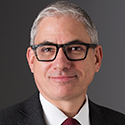
David Bass
Vice President of Program Strategy, AGB
David Bass provides thought leadership on board governance and best practices that relate to philanthropy in higher education. He oversees the development of programs and resources supporting institutionally related foundation boards, institutional governing boards, and other senior staff and volunteer leaders involved in higher education fundraising and stewardship. David previously served as AGB’s director of foundation programs and research.

Subscribe to AGB podcasts on these platforms: