
 Chat with AGB Board Bot
Listen to this article on the AGB Soundboard App
Cover Image Credit: Stock.Adobe.com/29Mokara/BonoTom Studio, Inc.
The new Workforce Pell Grant program has the potential to expand the Pell Grant program, the U.S. federal financial aid program for low-income students. With Workforce Pell, federal Pell Grants will be able to fund shorter-term education programs and credentials to increase workforce-ready training beginning in July 2026—not just undergraduate degree programs. Could the implementation of Workforce Pell spur the creation of more short-term education and credential programs?
What does Workforce Pell, the Trump administration’s new construct to open financial aid for low-income students pursuing short-term training programs, have to do with institutions historically focused on traditional liberal arts residential education?
More than you might think, says Arthur Levine, president of Brandeis University. “We’re living in a time in which postsecondary education, not necessarily a degree, is essential to getting most decently paying jobs,” Levine says. “What’s also true is that new technologies and artificial intelligence (AI) are going to eliminate parts of many people’s jobs, and some jobs in total, and the half-life of knowledge is also getting shorter and shorter and shorter. So the real need in the years ahead is going to be for short, non-degree programs that can re-skill, upskill, and new-skill people. If I had to guess, that’s going to be the new majority in higher education, because if you’re coming for a degree, that’s a one-time deal—I come, I get my degree, I leave. But I’m going to need to be reskilled all my life. When you look at all those people, they far outnumber the traditional population going into higher education. So in some respects, what Workforce Pell embarks upon is the first recognition of that.”
Brandeis University is already pivoting in that direct through an initiative called the Brandeis Plan to Reinvent the Liberal Arts, which, as self-described, seeks to inject vocationally oriented elements throughout its curriculum, including microcredentials, a career competency second transcript that complements the traditional academic record by capturing the skills, experiences and competencies that students gain inside and beyond the classroom, and a unified academic structure that fuses liberal arts and professional education, giving students expansive access to interdisciplinary learning, real-world experience, and faculty mentors across fields.
While, in the immediate future, Brandeis is not examining standing up a profusion of short-term training programs that would be eligible for Workforce Pell financial aid, it is examining whether certain programs, such as ones involving data analytics that will support a microcredential or an AI bootcamp, might qualify, Levine says.
Indeed, a number of higher education leaders interviewed for this story say that Workforce Pell may be important less in its own right because the amounts that will be available are expected to be no more than $4,310 for a 14-week, 599-clock-hour program and much less for shorter ones, according to an analysis by New America Project Director Wesley Whistle.1
Further, it may take years for a significant number of programs to qualify. However, as a bellwether of how higher education funding, results expectations, and other related developments are converging around shorter-term upskilling programs, Workforce Pell is a sea change. Higher education institutions, they say, will need to increasingly participate in such efforts to stay eligible for funding and relevant to the needs of students. And boards will need to do their part to be aware of, and monitor, such efforts to fulfill their fiduciary obligations.
Perhaps most notably, the Workforce Pell provisions build on broader program eligibility requirements that establish a “new, common sense floor” for federal loans, says Kristin Hultquist, chief executive officer of higher education consulting firm HCM Strategists, a current board member and former board chair at Metropolitan State University of Denver (MSU Denver), and a negotiator in the U.S. Department of Education’s Accountability in Higher Education and Access through Demand-driven Workforce Pell (AHEAD) negotiated rulemaking committee for Workforce Pell. The “Do No Harm” provisions stipulate, specifically, that graduates of programs must earn more than high school graduates three years later.
“The Workforce Pell standards are quite high, with expectations of 70 percent completion and 70 percent placement rates and earnings that exceed 150 percent of the poverty line less the tuition and fees paid (known as the value-added calculation, see below). Accessing Workforce Pell is a choice for public colleges; meeting the new accountability floor for federal loans is not optional. These are results we trustees should take responsibility for. Students need to be better off financially after completing our programs,” Hultquist says. “The bottom line is the federal government’s been trying to upgrade its framework to respond to what people are asking for in terms of value. We need to not fight against it and recognize that we’re all rowing in the same direction. It doesn’t help students, and it doesn’t help our public confidence-building to object to these or throw it back to the courts.”
The Law and Implementing Rules Take Effect
Passed into law as part of the OBBB on July 4, 2025, Workforce Pell expands eligibility for Pell, the federal government’s marquee grant program targeting low-income undergraduate students. It establishes eligibility for programs that are between 150 and 599 instructional hours and that are between a minimum of 8 weeks long and a maximum of 14 weeks in duration, just below the instructional hour and duration minimums for standard Pell.
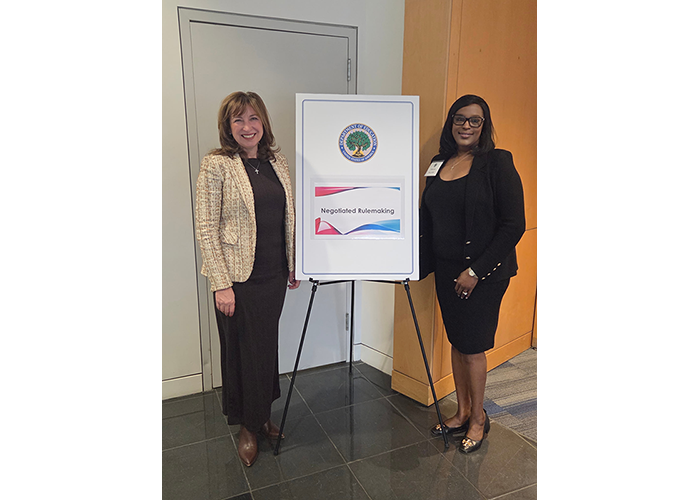
Kristin Hultquist, trustee and former board chair at Metropolitan State University of Denver, and Tonjua Williams, president of St. Petersburg College, participating in a negotiation rulemaking session regarding Workforce Pell.
Credit: Melissa Gonzales/St. Petersburg College
For programs in those windows, however, it imposes a host of requirements not applicable to Standard Pell-eligible programs. On July 1, 2026, implementation of Workforce Pell will take effect a year after the statute was signed into law, following expected adoption of implementing rules by the Department of Education in May or June (after publication date).
The key requirements for programs to be Workforce Pell-eligible include:
- Duration of Instruction: Requires hours of instruction of 150 to 599 hours and duration of between eight to less than 15 weeks, which the rulemaking clarified to be no more than 14 weeks. Credit programs must be at least four but fewer than 16 semester or trimester hours, or at least six but fewer than 24 quarter hours.
- Legacy of Program: Programs must demonstrate to the Department of Education that they have met the program length requirements for the 12 months preceding the date on which the institution applied to the Department of Education for approval.
- Pathways: A state governor must determine that programs award a credential that is stackable and portable across employers and prepares students for a subsequent certificate or degree program in which they receive credit for the work done in the Workforce Pell program.
- Targeted Industries: Programs must be deemed part of an in-demand, high-skill or high-wage industry by the governor in which the state where students will study, after consultation with the state’s workforce board.
- Outcomes: The law requires that programs show both a 70 percent completion rate and a 70 percent job placement rate using state collected data for a full year prior to approval. Completion is measured within 150 percent of the normal time for completion of the program. Job placement is measured 180 days after completion.
- Value-Added (VAE) Calculation: A program’s tuition and fees for a given award year must be less than the “value added earnings” of program completers from a newly defined cohort period based on a cohort of Pell Grant recipients. At this time, no Workforce Pell program will have VAE for three years after approval. However, the Department of Education could establish a new interim metric.
- Student Eligibility: Students will have to fill out a FAFSA and demonstrate financial need. Students with a baccalaureate, but not graduate degrees, may be eligible for Workforce Pell.
- Per Student Workforce Pell Limit: The per-student amount available for Workforce Pell, like traditional Pell, is prorated by program length, resulting in disbursements for the shorter Workforce Pell programs that are likely to be far less than the maximum Pell award of $7,395 in 2026–27.
- Loss of Workforce Pell Eligibility: A program that fails to meet Workforce Pell requirements will lose Pell eligibility at the end of the payment period that begins on the date the governor acts to withdraw program eligibility or fails to approve it or at the end of the payment period that begins after the Department of Education determines that a program did not meet required completion or placement rates. Programs losing eligibility may not regain eligibility for at least two years.
- Pell Grant Bar: The proposed rule would prohibit a student from receiving a Pell Grant, and not just Workforce Pell, if the student received grant or scholarship assistance from non-federal sources that equals or exceeds the student’s cost of attendance for the award year.
At press time, the Department of Education had issued the proposed rule for comment to implement the statue. However, because it had been preceded by formal discussions among stakeholders, most expected the final rule would largely conform to the Notice of Proposed Rulemaking elements.
The Target Audience
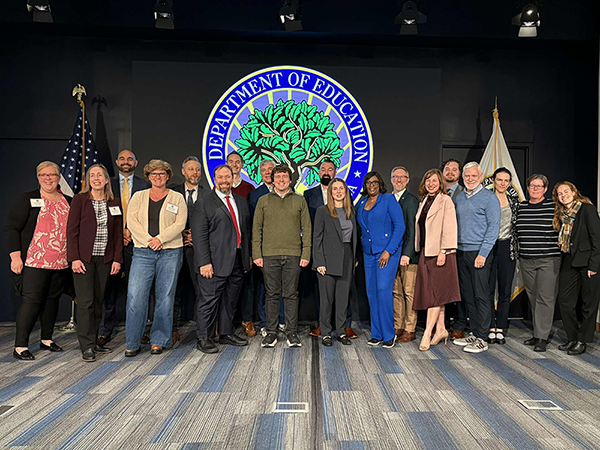
The U.S. Department of Education’s Accountability in Higher Education and Access through Demand-driven Workforce Pell (AHEAD) negotiated rulemaking committee for Workforce Pell.
Credit: Melissa Gonzales/St. Petersburg College
While, as Brandeis’s Levine alluded, a wide variety of students could benefit from Workforce Pell, it was particularly targeted at postsecondary students who seek more limited education or training before heading into employment, notes Carlo Salerno, managing director of educational insights at the Burning Glass Institute.
“It serves some people who are either looking for shorter-term training opportunities, either earlier in their career or later in their career, in the same way that other people who are in longer-term programs can access Pell dollars themselves,” Salerno says. “Most people who would be pursuing programs that workforce Pell would be supporting are not looking to make major education investments. They’re looking to make optimal education investments so that they can get into the workforce as quickly as possible and get into some kind of career-oriented trade that will allow them to start earning money, you know, quickly. So, Workforce Pell serves a different population that is going to school for a different reason and is looking for different things from the education experience.”
The Expected Lag to Stand Up Programs
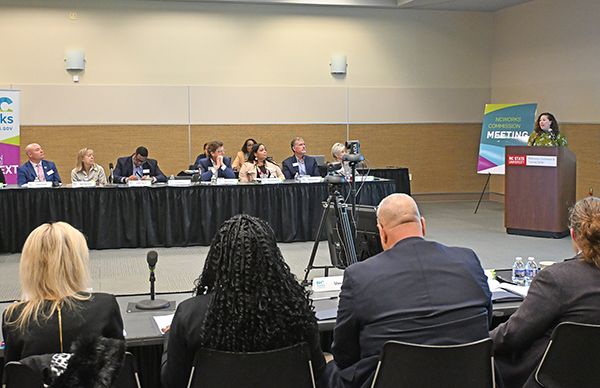
Assistant Secretary Andrea DeSantis reports on Workforce Pell to members of the NCWorks Commission, during their meeting in Raleigh, North Carolina, on February 11, 2026.
Credit: NC Department of Commerce
Institutions with programs that are eligible for funding under the program were expected to be few and far between in the near term due to a gauntlet of demanding federal and state requirements in the statute and implementing rules, rules that were expected to be finalized not long before the July 1, 2026, implementation date, many sources say.
“I would project that the soonest learners in most states will receive Workforce Pell, at the very earliest, would be for the winter 2026 or spring 2027 terms,” says Hultquist, who in the AHEAD negotiations represented public institutions of higher education, including institutions eligible to receive federal assistance Under Title III and Title V of the HEA, tribal colleges and universities and historically black colleges and universities.
That is largely because of the complicated set of steps that higher education institutions, the Department of Education, and, in particular, the states will need to take to approve eligible programs, Hultquist and others interviewed note.
Hultquist says that there is a logical order in which institutions and states should be working together.
“Trustees need to be asking, ‘How are we engaging with our state workforce board and the governor’s office in developing the new program recognition process?’” Hultquist says. “Once our colleges understand the process, we should run the models to see if we have any existing programs. We can examine where similar programs exist and begin having meaningful conversations about transfer and advising, so that some students can transfer directly into our programs. And finally, we [the higher education institution] directors have to say, ‘Okay, where, given the ecosystem in the state, do we think we uniquely have the ability to fill a gap, and how do we stand it up with employers and financing and then student outreach?’ So that’s the order it should logically be done, and it has to be done in that way, because otherwise we’re kind of spinning our wheels and wasting our time and/or resources.”
That challenge will result in few eligible programs that will be ready soon, agrees Randy Stamper, associate vice chancellor at the Virginia Community College System (VCCS) and the lead member of the AHEAD committee representing state higher education executive officers, state authorizing agencies, and other state regulators.
“The program has to have been run for a year and meet all these metrics,” Stamper says. “So you’re going to have some limited number in year one, but they’re going to have to go to the governor’s office and to the Secretary of Education. So that alone might take six months just to get approval right, and then, if you are starting a program, you have to run it for a year. Then you have to submit it for approval, then it has to get approved. And depending on where you are in the program year, it might be the next year before you’re applying for Workforce Pell, so it’s going to take time.”
“So as the criteria stand right now, we would likely have very few (VCCS) programs that would qualify in our primary workforce development program,” Stamper says. “In speaking with folks from various groups who were in the room [in the AHEAD committee meetings], I would estimate that there’s not going to be momentum and scale for probably two or three years.”
The OBBB statute does not expand the amount of Pell dollars per applicant. Given funding uncertainties in the program, some wonder whether the construct will be sustainable.
“The Congressional Budget Office currently forecasts a $5.5 billion shortfall in Pell funding in fiscal year 2026 and an $11.5B shortfall in fiscal year 2027—with as much as a $100 billion plus shortfall over the next decade—and by adding Workforce Pell, these shortfall estimates will undoubtedly grow,” says Brandon Busteed, chief executive officer of Edconic, formerly BrandEd, which partners with organizations to create industry-immersive experiences for students ranging from high school students to master’s degree students. “Unless Congress approves more funding for Pell overall, any expansion of it to support short-term work credentials may be moot.”
The Outcomes Test
Perhaps most significantly, Workforce Pell ties program eligibility to demanding outcomes tests. “The goal was to align Workforce Pell with the highest-performing short-term programs offered by institutions of higher education to ensure that students receiving aid were likely to complete the program and get a job,” noted Jennifer Stiddard, a senior director in the Policy and Advocacy unit at Jobs for the Future (JFF), in a JFF analysis of the statute. “Hence, there are a number of additional metrics that will apply for initial program approval, as well as continued approval.”2
As noted above, the law requires that programs show both a 70 percent completion rate and a 70 percent job placement rate using state-collected data.
In addition, it imposes a value-added earnings test based upon completers who received federal aid. “The published tuition and fees for Workforce Pell programs cannot exceed the ‘value-added earnings’ of those completers who received federal student aid. The value-added earnings are defined as the median earnings of graduates minus 150 percent of the federal poverty line, measured three years after completion. The earnings are adjusted by the state and metropolitan area regional price parities of the Bureau of Economic Analysis based on the location of the program,” according to an analysis by Westley Whistle, project director at New America’s Higher Education Program.3
The OBBB also imposed a more general program accountability component, a “Do No Harm” test that revokes a program’s eligibility for federal student loans if the earnings of its graduates are too low. It compares the median annual earnings of graduates four years after completing their programs to a benchmark chosen by program to represent what those students might have earned had they not pursued the degree.
The State Role
An unusual aspect of the statute and implementing rules is the degree to which it relies upon state actions. Workforce Pell imposes a variety of expectations upon the states, including developing data systems to capture data on labor market outcomes for short-term postsecondary programs and setting up approval processes for programs to ensure they meet the standards.
“States will provide labor market analyses and will be responsible for identifying the industries and occupations with the highest demand, the greatest wage potential, and the strongest need for skilled workers,” Stiddard’s analysis noted. “[They] will develop their own processes without needing prior approval from the U.S. Department of Education, and they will then certify programs based on federal requirements. Then the department will approve or deny the states’ programs. At this point, there is no proposed regulation or statutory language that would prevent states from augmenting these requirements with additional metrics to better support alignment with other programs and state goals around credentials of value.”
Different states are situated differently to respond to that challenge, Stiddard says. “Some states have seen the writing on the wall for years and have been thinking about, ‘if this were to pass, how would I implement it?’ ” Stiddard says. “I would say North Carolina is one of the ones that’s been thinking about this for a very long time.”
“I sat there with one of my alternate negotiators, who is from the North Carolina Department of Commerce, and she gave me a beautiful spreadsheet around who’s going to be eligible for Workforce Pell based on actual placement in field data,” says Hultquist. “Colorado doesn’t yet have the data elements in our education-to-employment data system to produce these estimates, and most states are in the same boat: we don’t collect occupational codes in our unemployment insurance data system. California legislators have introduced legislation to incorporate the hours worked, location of employment, and occupational codes needed to verify for this program. Building state data infrastructure takes time and new money. With our consensus rulemaking package, the Department is now giving states three years to verify Workforce Pell program eligibility.”
The North Carolina colleague Hultquist mentions is Andrea DeSantis, assistant secretary for Workforce solutions at the North Carolina Department of Commerce, and the list is, “Some NCCCS WCE Course and Credential Combinations Potentially Eligible for Workforce Pell,” which lists 87 courses and credentials, including, for each, their corresponding 2023–24 completion rate percentage, and, for 2022–23 course completers, their wage rate match and median earnings.4
The list is one resource among many provided in an extensive North Carolina Community College System Workforce Pell Toolkit.5
Stiddard says JFF is interested in working with states to help them organize their response to Workforce Pell.
The Compliance Challenge
The number of strings attached to Workforce Pell has narrowed the programs for which it will be applicable and/or financially feasible for some institutions, says Jeff Arthur, chief regulatory officer at ECPI University and lead negotiator on the AHEAD Committee for proprietary institutions of higher education.
The program also has structural challenges, he says. “In many cases, the funding just isn’t enough to fully cover the cost of short-term programs,” Arthur says. “Because it’s still structured as a Pell Grant, eligibility is limited—by design—to low-income students, and often the very lowest-income students. Then when you prorate those funds, the total award can end up being quite small. That means students may still need to rely on loans, employers, or other sources to make up the difference. So while the intent is to expand access, how that plays out in terms of affordability and completion will need to be watched closely.”
Arthur added that Workforce Pell may work especially well for community colleges, where it can supplement state support, and that it may also serve as a pathway to further learning for some students.
A nightmare scenario posed by Workforce Pell is that the statute provides that institutions that have insufficient outcomes will lose eligibility. One of the biggest points of debate [during the AHEAD Committee meetings in December and January] was whether or not an institution that does not meet the wage metrics would lose access to all types of funding or just direct loans, notes Stamper.
“Several of us believe that an institution should not lose access to Pell if a program shows significant wage gains but maybe falls under by a few dollars of whatever that value added metric is,” Stamper says. “And then there was another group of folks that felt, if you don’t meet the metrics, then if you can’t get a loan, you shouldn’t be able to get Pell, right? And I thought the department did a very good job of reaching a middle ground whereby, if a program does not meet the metric two years in a row and 50 percent of that program’s students or revenue is Pell, then they lose Pell. And I think that’s fair, because if all of those characteristics are true, then that program has a problem.”
As a result, in analyzing programs, colleges and universities will want to ensure that programs are sustainable, which can be a particular focus for board members, according to Stiddard.
“There’s that fiduciary duty and there’s also that duty of sort of understanding the intent and the mission of the institution,” Stiddard says. “I think what trustees are going to want to make sure of is that they understand what it takes for a program to qualify and to remain qualified. So I think there should be a lot of questions as a trustee for your institution about, how are you choosing these programs? What metrics are you using? Do we have the data? Do we need more data and, if so, what? What does my institution need to be successful now and in the future?”
Integration With Other Funding
To use Workforce Pell efficiently, institutions will have to integrate it into other financial options for low-income students, Stiddard says.
“It’s not just the Workforce Pell grant itself,” notes Jamie Traugott, director of student services and K–12 alignment at the Washington State Board for Community and Technical Colleges (SBCTC). “I think one should anticipate that a Workforce Pell grant award may max out, especially for students enrolling part time. So, even if a student demonstrates a great amount of need and the program costs more, there’s only a certain amount the grant is going to cover. However, for a lot of state aid programs, the eligibility for that state aid is tied to Title IV or Pell, so a student may now be eligible for additional aid programs. This could include an individual training account under WIOA (Workforce Innovation and Opportunity Act), BFET (Basic Food Employment and Training), or SNAP (Supplemental Nutrition Assistance Program). There might also be some type of TANF (Temporary Assistance for Needy Families) dollars. I think colleges that are adept in the non-credit, workforce, and continuing education space are asking, ‘How do we package these dollars for students?’ ”
Because the final rule is anticipated to make Workforce Pell “last dollar financial aid,” intended to be paid after all other financial aid resources have been awarded, it makes those dollars harder to integrate and will require careful consideration of their interaction with state grant programs, says Traugott.
However, Traugott’s colleague, Marie Bruin, director of workforce education at SBCTC sees at least one sizable set of students for whom Workforce Pell might make sense. Bruin notes that some of the OBBB’s other requirements included work requirements for SNAP recipients and future Medicaid recipients and that these individuals may need short-term training to reenter the job market to qualify for continued benefits.
“There will be an expanded population of people seeking to maintain eligibility for SNAP; it may be those over 50 years of age who now need to meet a work requirement to keep their food assistance,” Bruin said. “We’re expecting an influx of new people who may be looking for short-term training.”
The Shape of Things to Come
The OBBB’s “Do No Harm” measures are beginning to be adapted at the state level. In early March, Indiana governor Mike Braun signed into state law a bill that would end academic programs at state colleges and universities if they result in insufficient graduate earnings and it uses the same “Do No Harm” earnings test contained in the OBBB.6 An analysis by Chalkbeat Indiana using U.S. Department of Education data showed that 16 degree programs at 11 Indiana colleges and universities and 21 undergraduate certificate programs would not pass the earnings test.7 Similar bills are under consideration in Nebraska, New Hampshire, and West Virginia.
There is a good chance down the road that there will be a legislative push to apply the even more restrictive Workforce Pell requirements to Pell itself and to other types of federal and state funding, many interviewed believe.
Such positions were advanced at the AHEAD negotiations, Hultquist says. “The taxpayers and the legal group wanted to see that the threshold for direct loan eligibility applies to Pell Grant eligibility for gainful employment-designated institutions and all the rest of us, said, ‘No, do not tie that to Pell,” Hultquist says, adding that ultimately, a compromise was reached among the negotiators and the Department: If low-earning programs chronically fail most students or derive most of their revenue from federal financial aid, then programs can lose Pell at the Secretary’s discretion.
“I do worry this application of the direct loan accountability terms will be proposed again as a means to help solve the Pell grant funding shortfall. Access to high-value, lower-paying fields and access in rural communities will then be in jeopardy,” she adds. “Trustees need to be part of the community-wide voice to hold the line and not allow this progress.”
An Overnarrowing of Higher Education?
Many interviewed also expressed concern that the extensive Workforce Pell compliance requirements could actually be counterproductive, including Jeffrey Holm, vice provost for strategic programming, analytics and effectiveness at the University of North Dakota (UND).
“My concern about the Pell grant side of it is that they are defining workforce development in a fairly narrow way that is based in the current situation, and are not looking at the fact that people that graduate from University of North Dakota this May, the end of this spring term, are going to be in the workforce for, on average, probably 30 to 40, years, [and are likely to change jobs over that period],” Holm says. “Workforce Pell is dependent upon the state determining that these are high-need, high-immersion areas. So, okay, medical assistants is on the state of North Dakota’s high-need and emerging occupations list published by our Department of Commerce. For that one, I wouldn’t have a concern. But with respect to short-term heating, air conditioning, refrigeration mechanics, and installers, I don’t know; in 10 years where is heating and air conditioning and refrigeration mechanics going to be? Is that something that is now like some things that you know you don’t fix you and install the things or is that it going to change dramatically?”
Bruin shared similar concerns. “I believe that students should still have that opportunity to decide what they want to be and what they want to grow into,” Bruin says. “Some of that should not be narrowed to only what labor market demands are or what industry is willing to sign off on. I think there’s a place for people to learn their passion.”
Are the Reforms Not Far Enough?
And some said the reforms simply were not enough to break the envelope on funding unconventional sources of education that would benefit vocationally oriented learners, such as Busteed, chief executive officer of Edconic, formerly BrandEd, partner with organizations to create industry-immersive experiences for students ranging from high school students to master’s degree students by operating Sotheby’s Institute of Art, Vogue College of Fashion, The School of The New York Times, and Manchester City Sports Business School.
For Busteed, formerly global head of learn-work innovation at Kaplan, the reforms in Workforce Pell simply are not the type of fundamental reorientation toward employers that are needed if the goals of the reforms are, fundamentally, employment-related ones.
“It is entirely misplaced as a program centered around funding for educational institutions; it should be centered around employers and industry associations instead,” Busteed says. “Employers looking to fill in-demand jobs should be in charge of the funding and it should allow them to bring on eligible workers (using the same Pell eligibility as we do now) into ‘trial or preparatory’ roles that are paid (like an internship) allowing the candidate to begin working in some manner and/or get paid to complete required training for permanent roles open at the employer. This keeps the definition of ‘in demand’ entirely linked to employers—the sources of jobs. The issue is not just about candidates needing credentialing or training for these roles but also work experience within these industries. This kind of plan solves both issues.”
If implementation of Workforce Pell raises difficult implementation challenges and the policy concerns discussed immediately above, on one criterion it cannot be faulted, which is one of transparency.
“There needs to be clear, consistent expectations for any institution that wants to participate, regardless of sector or program type,” Arthur says. “That means program-level data on total cost, time to completion, and graduation rates.”
The Search for Programs
As noted, Workforce Pell has unleashed a search for programs that may be impactful and qualify. SBCTC’s Bruin initially thought many projects would qualify for Workforce Pell but says that that list has narrowed.
“As we’ve gotten more clarity on the process and the criteria, the list of eligible programs has gotten smaller,” Bruin said. “We intend to move forward [with Workforce Pell with] several existing programs. We hope to start with three to five programs and then see what we can build from there,” Bruin said. “We have great promise in our non-credit, continuing education programs, which offer business-relevant training. We will consider opportunities to bring in those programs as well.”
She says some of these areas may include IT, advanced manufacturing, diesel mechanics, allied health-related training for nursing assistant/aids, and phlebotomy.
Another question mark is how active four-year institutions will be in offering Workforce Pell-eligible programs. Eyebrows were raised in January 2025 when, after the Department of Education announced that short-term workforce programs would be a priority for grants for Fund for the Improvement of Postsecondary Education (FIPSE), many of the 22 grantees were four-year higher education institutions.
Four-year, R1 institution UND was one of the winners—nabbing a $1.6 million to support a short-term data skills pathway program—but Holm says that its grant win reflected the particulars of the program and faculty initiative rather than any particular universitywide initiative to target short-term training programs.
Holm says North Dakota state education officials have identified about 22 existing programs at UND that could meet the needs and fill the different requirements of Workforce Pell, all non-credit offerings.
“We probably would start with the best four or five, and I would hope we could start by the fall [2026], but I don’t know the answer for sure,” Holm says.
Holm says beyond short-term professional training there is a second set of programs that might make sense to pursue as Workforce Pell-eligible.
“We have 70 undergraduate certificates and some of those would qualify as Workforce Pell- eligible if we offered them in a way that met the timeframe,” Holm says, adding that offering these could be more challenging because they are credit-bearing and necessary approvals or adjustments would likely happen more slowly than for non-credit programs.
In North Carolina, DeSantis anticipates that most initial applications will come from North Carolina’s 58 community colleges, with a smaller number of applications coming from four-year institutions and proprietary schools.
“The North Carolina Community College System estimates that each institution has up to five programs that meet the initial program criteria around program duration, length, completion, and employment,” DeSantis says. “It is our goal to begin approving programs in advance of July 1, 2026; however, the state approval process is just the first step for an institution. Once approved by the state, institutions will need to submit their approved programs to the U.S. Department of Education. Currently, we are waiting on final rules and the date that the federal approval process will open. North Carolina is working to ensure that our institutions can be at the front of the line for federal approval, but the timeline for federal approval is up to the U.S. Department of Education.”
The overall institutional burden may be too high for many institutions, some note. While private, for-profit institutions might seem a natural audience for Workforce Pell, that is not necessarily the case, Arthur says.
He notes, for example, that such programs are not generally of interest at ECPI, a regionally accredited institution offering career-focused degree programs in technology, health science, business, criminal justice, and culinary arts headquartered in Virginia Beach, Virginia.
The Impact on Liberal Arts Education and Residential Institutions
Lynn Pasquerella, president of the American Association of Colleges and Universities, whose membership includes many traditional liberal arts residential institutions, says Workforce Pell may nudge those institutions toward a greater focus on career-oriented educational outcomes.
“Workforce Pell certainly marks a significant shift in federal aid policy, expanding support for short-term workforce credentials and increasing pressure on institutions—particularly liberal arts institutions—to tie education to labor market outcomes,” Pasquerella says. “The positive is that it will benefit many students and workforce pathways. But it also pushes traditional degree providers—especially residential liberal arts colleges—to rethink how they demonstrate relevance and value in an outcomes-focused funding landscape.”
Still, Pasquerella questions whether the education fostered will be comprehensive enough.
“I don’t think short-term programming is a quick fix for what we’re facing in our society,” Pasquerella says. “Tony Carnevale [the former longtime leader of Georgetown University’s Center on Education and the Workforce] has demonstrated that the value of a liberal education goes beyond career preparation by helping to mitigate authoritarian attitudes and prepare students for citizenship and life, in addition to the workforce. You can get short-term training for immediate employability, but that job might be obsolete with the advent of AI in another five years. So then what are you going to do? The best education we can offer is a liberal education that prepares you to be adaptable and flexible in the face of rapid change.”
The Role of the Board
Hultquist says she has discussed the negotiated rulemaking with her board.
“Our board discussed the new Workforce Pell parameters and the harmonized accountability framework for direct loan eligibility,” Hultquist says. “Workforce Pell is important for the university to consider on two fronts. First, how do we assure that completers of approved programs can transfer all credits to our baccalaureate degree pathways? Because Workforce Pell eligibility will count toward a student’s lifetime Pell eligibility (roughly six years, and technically a maximum of 12 terms or 600 percent of the scheduled annual award)? We don’t want our Roadrunners [the school’s mascot] to run out of Pell eligibility and face an affordability cliff in their final years of our bachelor’s degree programs. If you’ve taken some time to get a workforce Pell first, it puts an increased premium on timely completion and really good, you know, structured pathways. Related, what relationships and pathways need to be strengthened so more Workforce Pell completers pursue further education and economic mobility in a bachelor’s degree program? Second, we need to step back and understand the factors Congress is using to evaluate eligibility for this new Pell program because these are the outcome metrics that we can expect will increasingly matter to the state and to learners. What are our program-level completion and placement rates? How many years after graduation does it take for students to recoup the cost of their program? And importantly, how can we map the essential skills in our programs, particularly humanities programs, to in-demand industries and growing fields?”
Hultquist says that the board is involved in such decisions. “They see how does this response of Congress align with the types of changes we’re trying to advance here? How can we use this to, you know, inject more energy or continue our focus? But they welcome that outside contribution to our overall goal as an institution, which is to, you know, continue to provide an accessible, excellent education that maintains its affordability. We’re trying to reduce time to degree, because that affects affordability and value. We are giving you career coaching and career maps and academic course seat maps that align with in-demand jobs, and we’re doing it all in the context of a comprehensive regional institution. We’re not giving up on our liberal arts.”
Hultquist is not concerned that the federal “Do No Harm” accountability framework will impact programs at MSU Denver. “Our expected ‘no program fails’ rate will be an important point of evidence for why choose MSU Denver, and why choose a bachelor’s degree path,” Hultquist says. “Our university is already keenly focused on how to make all our programs career connected. We can’t be in the business of economic and social mobility if we weren’t.”
As concerns board fundraising endeavors, Pasquerella notes that workforce-related ventures can be a fundraising layup.
“At Mount Holyoke, we did a whole range of activities—and it was almost the easiest money I ever raised—because alums want students from their institution to be able to get jobs and to be successful in the world, which enhances the prestige of their own degrees,” Pasquerella says. “So I think focusing on those opportunities—and then telling the truth about the real concerns people have with respect to higher education—that it’s too expensive, too difficult to access, and doesn’t teach students 21st-century skills—is essential. The only way we’re going to be able to restore trust is by addressing these ongoing concerns and acknowledging that the current financial model for higher education is unsustainable.”
David Tobenkin is a freelance writer based in the greater Washington, D.C. area. This story includes research that he and Felix Quayson, an assistant professor at Texas State University, performed under an ECMC Foundation grant to study Workforce Pell.
1. Westley Whistle, “Workforce Pell: What You Need to Know,” New America, October 22, 2025, https://www.newamerica.org/insights/workforce-pell-what-you-need-to-know/.
2. Jennifer Stiddard, “JFF Offers Guidance on Workforce Pell Implementation,” Jobs for the Future, December 19, 2025, https://www.jff.org/blog/jff-offers-guidance-on-workforce-pell-implementation/.
3. Whistle, “Workforce Pell: What You Need to Know,” 2025.
4. “Some NCCCS WCE Course and Credential Combinations Potentially Eligible for Workforce Pell (Courses with credentials that have been run for 150-599 hours, within 8 to <15 weeks),” North Carolina Community Colleges, December 2025, https://wordpress.nccommunitycolleges.edu/wp-content/uploads/2026/03/CE-courses-with-credential-in-WF-Pell-timeframe-updated-for-toolkit-3-9-2026.pdf.
5. “Workforce Pell Resources,” North Carolina Community Colleges, accessed April 15, 2026, https://www.nccommunitycolleges.edu/workforce-pell/.
6. Michael T. Nietzel, “Indiana Governor Signs Law That Targets Low-Earning College Degrees,” Forbes, March 9, 2026, https://www.forbes.com/sites/michaeltnietzel/2026/03/09/indiana-governor-signs-law-that-targets-low-earning-college-degrees/.
7. Aleksandra Appleton, “Indiana’s Targeting of Degrees With Low Earnings Could Eliminate These Programs,” Chalkbeat Indiana, February 11, 2026, https://www.chalkbeat.org/indiana/2026/02/11/lawmakers-target-degrees-with-low-earnings-for-graduates/.
RELATED RESOURCES



Reports and Statements
Top Public Policy Issues Facing Governing Boards in 2025–2026:
Accountability and Regulation