
 Chat with AGB Board Bot
Opinions expressed in AGB podcasts are those of the speakers and not necessarily those of the organizations that employ them or of AGB.
Immigration impacts nearly every dimension of higher education—from who enrolls and teaches, to how institutions fulfill their mission. In this episode, AGB’s Jackie Gardina speaks with Miriam Feldblum, co-founder and president of the Presidents’ Alliance on Higher Education and Immigration, about the practical steps governing boards can take to support students, faculty, and institutional sustainability in a rapidly shifting immigration landscape. Board members will gain insights into the key populations affected, current policy pressures, and what fiduciary leadership looks like when it comes to protecting talent, values, and opportunity.
Aired: January 23, 2026
Podcast Transcript
Introduction:
Welcome to the Trusteeship Podcast. Today, we’re talking about an issue that affects many US colleges and universities—immigration. From enrollment trends and talent pipelines to faculty recruitment and research innovation, immigration policy is deeply intertwined with higher education. AGB’s Senior Director of Institution and System Programs Jackie Gardina speaks with Miriam Feldblum, co-founder and president of the Presidents’ Alliance on Higher Education and Immigration, about how governing boards can lead with purpose—protecting their communities and institutions while navigating the complexities of federal policy and global mobility. Let’s get started. Jackie?
Jackie Gardina:
Thank you so much for joining me today, Miriam. I think what we’re going to be talking about is a really challenging topic for higher education institutions and quite honestly for the country, immigration, and I want to give you an opportunity first to talk a little bit about the organization that you lead, the President’s Alliance on higher education and immigration so people understand that that organization exists and what it does.
Miriam Feldblum:
Thank you so much Jackie, and I’m so grateful to be here with you. The President’s Alliance on Higher Education and immigration was launched in late 2017 under the first Trump administration, and its purpose was really to bring college and universities together around the immigration issues that were impacting our students, our campuses, our communities and nation, and that core mission has continued. I will say we started with less than 30 college and university leaders, and now we have close to 600 college and universities from across the country who are members, public and private, urban and rural. We represent the full diversity of nonprofit higher education in the US, and I can share more about our member institutions, but we’re really coming together to support immigrant students, international students, refugee students, and not only students, but also other campus members and how we support the higher education mission and our role in society.
Jackie Gardina:
It’s impressive that you went from 30 to 600 institutions. Just a basic question to provide context for our discussion, why should boards of trustees at higher education institutions need to understand immigration policies and how they’re implemented? What exactly is the intersection between immigration and higher education?
Miriam Feldblum:
I love this question because it is so important to higher education and connects higher education to our local communities, our state economies, and to our national mission. So let’s take a step backward and think about the fact that this is really the story of how higher education builds a domestic and global talent pipeline, and that pipeline fuels our workforce, drives US station business’ research in our economy, and the domestic pipeline includes immigrant students, whether first generation immigrant students or second generation immigrant students as well as international students, and students and scholars. They all come together to contribute on campus, but also in the local community. This also contributes to our national security and fosters vital cross-country ties and relationships. So what does that mean for boards? Well, first off, immigration is driving domestic enrollments in higher education.
So close to a third of all students in higher education are first-generation immigrant students. That is students born abroad or second-generation immigrant students, children of immigrant parents, and that doesn’t include international students, which is another 6%. So a significant portion of many public and private institutions are composed of immigrant origin or international students, but beyond that, immigrant origin and international students, scholars, are teachers, researchers, professional staff, staff across the campus contributing on campus and beyond. So from a board decision, from a board perspective, they’re really impacting core governance decisions from enrollment to workforce planning to research capacity to institutional reputation.
Jackie Gardina:
Okay, so you’ve just laid out the fact that immigration can touch every aspect of an institution. How do you suggest that boards tackle the complexities of this problem? Congress can’t tackle the complexities of it. So what should boards be doing?
Miriam Feldblum:
It is a great question and let me break it into a few parts. So first, a board needs to educate itself. How does immigration and the immigration policies impact our campus? So just basic awareness and education about the issues is really important. Second, there’s preparation. There are things that boards should be aware of and think about preparation in terms of for example, what happens if immigration enforcement takes place on campus? What if there are policies that are going to really diminish our ability to recruit and retain international students? What if there are policies that directly or indirectly impact our students or employees? Third, with this, there’s this regular oversight. How are our policies and processes working in alignment with our core mission, which is focused on student success in our terms of our research production, depending upon the type of institution it is, and then finally, boards can also be thinking about what can we do as boards in terms of our own engagement, whether on campus to show support in the community or nationally.
Jackie Gardina:
So as you’ve talked about a lot of different stakeholders in the higher education community that might be affected from applicants, to students, to an employee, to research, to the international scholar. So let’s talk about those different populations on campus who are affected by the immigration policies and what boards should understand about each of them. Let’s start with immigrant student and families, and I wouldn’t put the DACA recipients or the dreamers in that category.
Miriam Feldblum:
Absolutely. So as you may remember, I start off saying a third of all students are first or second generation immigrant students. Now, a majority of those students are children of immigrant parents, so they’re US citizens, but close to two million students in higher education are first-generation immigrant students, meaning they were born elsewhere, and of those around half a million are undocumented, including DACA recipients. Though in actuality, fewer and fewer students are actually DACA recipients because there has not been an opportunity to be able to either enroll in DACA, to be able to apply for DACA and also because the requirements of DACA means that many undocumented students came to the US after 2007, and to be eligible for DACA, you had to have come by June of 2007. So there’s a range in terms of immigrant students who are having different immigration statuses. Some of them may be fully undocumented, some of them may have some deferred action.
They may be asylees, they may be refugees, they may be what’s called documented dreamers, which are the students, the children of non-immigrant professionals like H1BB visa holders. So it’s a full range, and one of the first things I say to a campus is do you know who’s on your campus? Do you know what are the issues and needs of your campus? And then to say I’m focused on students, but also do think about your faculty and employees? I will say that when we first started, and this has continued to be the case, is that many campuses are also thinking about their staff who may hold temporary protected status or have other temporary precarious immigration statuses and are now feeling a great deal of anxiety and uncertainty, and as boards with fiduciary responsibility and with wanting to support students and employees, boards in particular are going to be focused not only on students, but also who among their employees may need greater support. So that’s the first group to think about are the immigrant students and families as well as the children of immigrants who may be concerned for their parents.
Jackie Gardina:
That bucket by itself is overwhelming, but I want to move to one that has been probably in the news a little bit more in the higher education context with the second Trump administration, which is the international students and scholars. What do boards need to understand about that subset of their population?
Miriam Feldblum:
International students and scholars are a key part of the talent pipeline that has made the US the premier destination for talented individuals from around the world. So right now, we hold a really important position in the world and it benefits us. It benefits us on campus, but also in our community and in our state and national economy. So who are international students? There are over a million international students currently in the US. A portion of them have actually already technically graduated, but they’re on optional practical training, which is they’re applying what they learned on campus after graduation for their first launching their work in the careers. What we now need to understand is that since last spring, there has been an escalating cascade of policy actions that have created an environment of uncertainty, stress, and anxiety for international students. You can think about the mass revocation of visas and seemingly arbitrary revocation of visas that many students were suddenly facing. The unlawful terminations of their CVIS records, which then were reactivated, but still has been causing issues for students.
So we had just a suspension, a halt of visa interviews last spring when it was prime matriculation season for campuses, and even when that was lifted, there was difficulty in finding visa interviews in a good number of countries, including India, which really is the country of origin for so many international students. So what has that mean? So even though we have at this point over a million international students in the US, we had around a 17% decline in new international student enrollments. Didn’t impact all campuses the same. You may have trustees who say, “No, our campus was good.” It did, the initial impacts were really seen at the master’s level and especially from countries like India in which it was very difficult to find interviews, but what we know is that that is just the tip of the iceberg because when we ask international students now about their interest in the US, we’ve seen significant declines and we know already that there’ve been declines in applications for this coming year.
So we anticipate significant declines in international students in the new enrollments for fall 2026, and this impacts campuses across the country. I’ll just also add, Jackie, that we have an expanded travel ban and what that means is that prospective students from those countries are now barred from coming with some very few exceptions, and it includes F1 students and J1 scholars, which can also affect the teaching and academic programs for colleges and universities. And this really means closing the door on global talent and talent from around the world in which we know it’s there, but the opportunity may not be, and we were the ones to give the opportunity and to benefit from the opportunity that we give these students.
Jackie Gardina:
So we’ve talked about the immigrant family and student. We’ve talked about the international student and scholar. We still have at least one more bucket of community members left. I don’t know how big of a bucket it is, but it seems like one that we should talk about, which is refugee students and families.
Miriam Feldblum:
I’m so glad you asked about refugee students and families. If we think about who’s on our campus, what we know is that there are over 120,000 refugee students enrolled in higher education, and these are students who have come through our US refugee admissions program, and we were really excited that under the previous administration, we actually launched a new initiative with the administration called Welcome Corn Campus. The administration was looking to enable campus communities to sponsor refugee students who are going to come not only for study, but also then have a pathway to protection and citizenship. All refugee admissions have pretty much been closed during this current administration, except for a few exceptions.
So refugee students now are certainly anxious about the current policies that both are calling into question refugees who have come in the past four or five years, but also seeing the suspension and the termination of temporary protective status or humanitarian parole. There are many colleges and universities that welcomed students and researchers from Ukraine, from Afghanistan, from Haiti, from Venezuela, and those individuals on campus students as well as potentially researchers, staff, faculty, are now looking at their immigration status and worried about their future in the US.
Jackie Gardina:
It seems like across all these populations, the common thread is really uncertainty in the current environment, and that’s where board leadership would really matter. The boards don’t have control over immigration policy or how the State department vets a Visa applicant. So what do boards have control over? What kind of policies or actions can boards take in this uncertain environment?
Miriam Feldblum:
There’s a lot of things that boards can do, but let me say at the outset, each board does not have to do everything, but every board can consider what they can do and maybe pick one or two things that they want to lean into. So first is going back to what I said in terms of educating themselves, understanding what the issues are for the campus is really important because losing these students, losing scholars and researchers is not just a financial impact. It’s really the impact on the higher education mission and the overall student success. So if you lose a scholar who can no longer stay here because of immigration policies, all the students in their classroom lose. If you lose international students, that will have direct impacts on departments and their ability, especially in the STEM fields. So educating, understanding what the impact is something that every board should consider doing.
Then second, I think that boards can help support campuses who want to try to navigate the rapidly evolving and complex immigration policies and support their students and employees and a board that can be able to say clearly, I understand the issues. I want us to continue to be engaged and to help support our students as we’re navigating can make a big difference. Boards can also say you know what, this is a time to help support litigation or a challenge because the effects on our campus are harmful and this is unlawful, And that’s the case if I consider for example, Austin Community College in Texas when the Department of Justice sued the state of Texas for its policy, its Dream Act policy, supporting dreamers to be able to benefit from in-state tuition, the community college board there said, this impacts our students. We need to stand up.
When a board says you can go and participate in amicus brief to support academic freedom, and we’ve had campuses join, we had 86 campuses and organizations join us when we filed an amicus brief last spring. That makes a difference. That helps those individuals in the community, and it’s also a decision that a board can take. So there are many ways. There’s educating and navigating, but there’s also really important ways to support litigation and challenges. It all depends on where that board is, what the state is, what the context is, but it should at least be on a menu of potential options for boards, and then finally I’ll say that there’s engagement communication that a board member could do. A board member may be a prominent business individual, may be someone who has a role in the local or state economy, and recognizing the value of immigrant and international and refugee populations in their state from their perspective, both in their own position, but also as a trustee of a college or university is really powerful.
So communicating the value and contribution in local ways that have national reverberations can make a difference, and also helping to support bipartisan dialogue because for the President’s Alliance, we spend time educating and navigating and time engaging and communicating, and then when we need to, we litigate, but in all those respects, boards can have a role to play.
Jackie Gardina:
And Miriam, just so I understand, is the President’s Alliance an organization that I as a trustee member might reach out to or have my president reach out to if I had questions or wanted training or an understanding of how something works?
Miriam Feldblum:
Absolutely. So we are working. We’re so grateful to be in conversation and communication with you. We work closely with our presidents. Our members are the institutions and the leaders. This is a presidential-level institution. We are a non-profit, non-partisan institution, so our engagement is within those parameters. We provide a lot of technical assistance to our member institutions. We have some resources that are only for our members and we have many others that we also share publicly, but we always are ready for a quiet conversation or a more engaged conversation on campus with a board, with the president or chancellor, or bringing together a group of leaders and students and faculty on campus, but we’re always ready to engage and to see what kind of assistance we can provide.
Jackie Gardina:
Miriam, that’s wonderful. Thank you so much for providing an overview, both of the complexities of the issue, but also the idea that the President’s Alliance is there to help institutions and their leaders navigate this difficult landscape.
Miriam Feldblum:
And if you’re not yet a member, please join us, but also, if you’re not yet a member and you just want to talk and want some support, we’re also here for you.
Jackie Gardina:
Fantastic. I’m glad we could partner.
Speakers
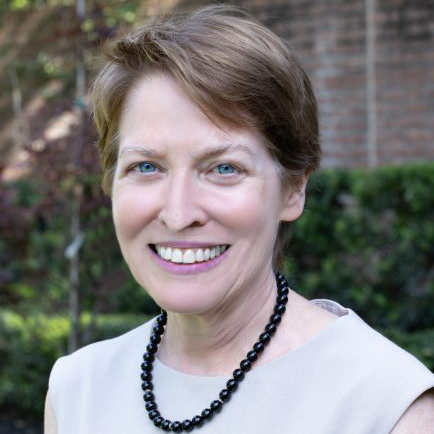
Miriam Feldblum
President and CEO
The Presidents’ Alliance on Higher Education and Immigration
Dr. Miriam Feldblum is the co-founder, President, and CEO of the nonpartisan, nonprofit Presidents’ Alliance. A national expert on the intersection of immigration and higher education, Miriam has written extensively and delivered presentations on undocumented, international, and refugee students, immigration policy and higher education, and highly skilled labor in the United States. She is a non-resident fellow at the Migration Policy Institute and author of Reconstructing Citizenship: The Politics of Nationality Reform and Immigration in Contemporary France. Miriam previously served as vice president for student affairs, dean of students, and professor of politics at Pomona College, as special assistant to the president, faculty research associate, and senior director at the California Institute of Technology, and as an assistant professor at the University of San Francisco. She received a BA in political science from Barnard College, and MA, MPhil, and PhD degrees in political science from Yale University.

Jackie Gardina
Senior Director of Institution and System Programs
AGB
Jackie Gardina is the senior director of institution and system programs at AGB. Before joining AGB, she served as the dean of the Colleges of Law, with campuses in Santa Barbara and Ventura, and as the associate dean and professor of law at Vermont Law School. Upon graduation from law school, she clerked for Chief Judge William Young of the U.S. District Court for the District of Massachusetts and then for the Honorable Levin Campbell of the First Circuit Court of Appeals. She recently completed an Ed.D. in Higher Education Management at the University of Pennsylvania.
Subscribe to AGB podcasts on these platforms:




RELATED RESOURCES

Resource Hub
Top Public Policy Issues
Resource Hub
Advocacy Groups in Higher Education